When choosing a new office chair, there are plenty of factors to weigh up. Durability, ergonomics, and style all matter, but one detail that often gets overlooked is the material.
The best material for an office chair depends on your individual needs, your working environment, and how much maintenance you're prepared to do. Mesh, leather, fabric, and vegan leather each have real strengths and genuine trade-offs.
If you’re torn between materials, let us help you decide. In this article, we’ll look at the pros and cons of each material and why each might be the right fit for you.
Office chair materials compared
| Material | Breathability | Durability | Maintenance | Best for |
| Mesh | High | Good | Low | Warm environments, long hours |
| Leather | Low | High | Medium | Executive and boardroom settings |
| Fabric | Medium | Medium | Medium | General office, volume fitouts |
| PU/Vegan Leather | Low | Medium | Low | Leather aesthetic on a tighter budget |
Mesh office chairs
Mesh backrests are tensioned across a frame rather than padded with foam. They flex as you move and conform to your back's shape, making them well suited to long hours at a desk.
A few of our favourite Buro chairs with mesh backs include the Buro Mantra, Buro Mentor, and Konfurb Luna, all of which pair mesh backs with padded seats.
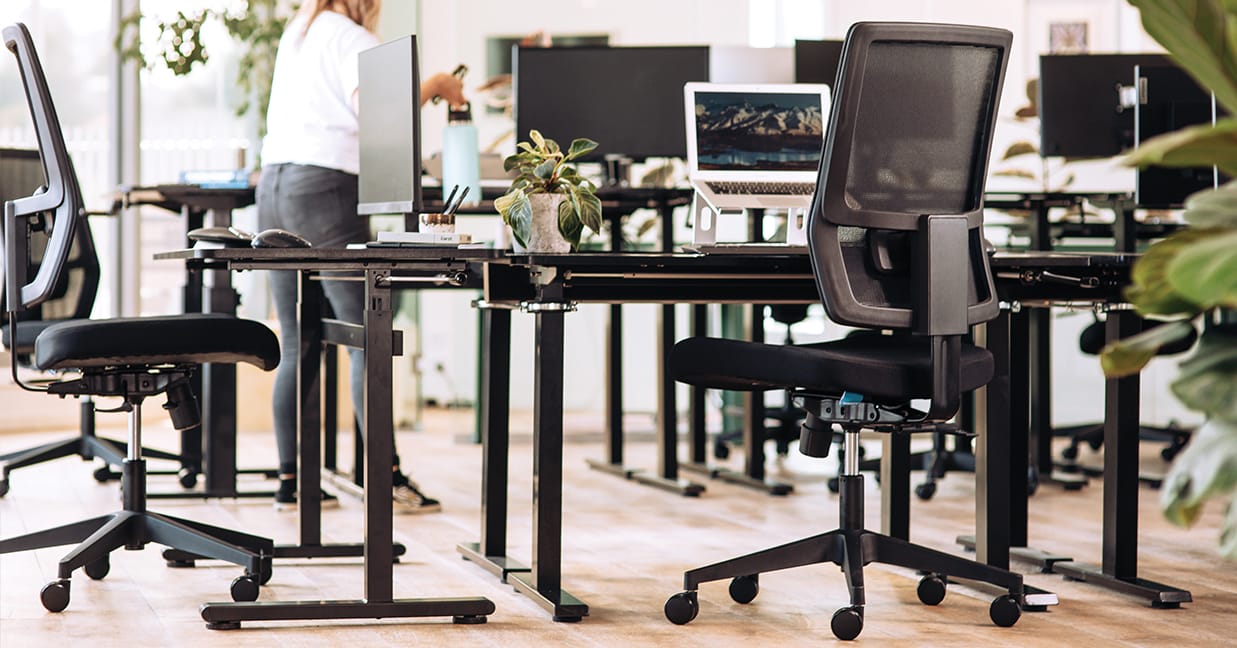
Buro Mantra mesh back chair in a coworking office.
Why mesh chairs work well in warm offices
Breathability is the main reason people choose mesh. The open weave lets air move across your back continuously, which in a warm or poorly ventilated office makes a noticeable difference by mid-afternoon. In the Australian climate, where air conditioning isn't always guaranteed, that's a real practical advantage.
Mesh chairs are also lighter than padded alternatives, which is handy in offices where seating gets moved around regularly. Support is worth understanding before you buy. A well-tensioned mesh back distributes pressure evenly across the lumbar and mid-back. Quality varies between products, though, so it's worth checking how the mesh is constructed and whether the chair has adjustable lumbar support.
Where mesh chairs fall short
Mesh offers less surface contact than foam-backed fabric or leather. Some people find this feels firmer, particularly in the lower back, if the lumbar adjustment isn't well set up. It's worth sitting in a chair before committing.
Build quality matters more with mesh than with most other materials. Well-made mesh holds its tension over years of daily use. Lower-grade mesh can stretch or lose its shape. For formal settings like boardrooms or executive offices, mesh can also look a little casual. Leather tends to be the default in those environments, and for good reason.
Leather office chairs
Leather is the most common material in executive seating, and it's been that way for a long time. It's comfortable, holds up well, and looks right in formal environments in a way other materials don't.
Buro's leather chairs include the Buro Persona 24/7 and the Buro Maverick 24/7, both built for demanding environments and extended daily use.
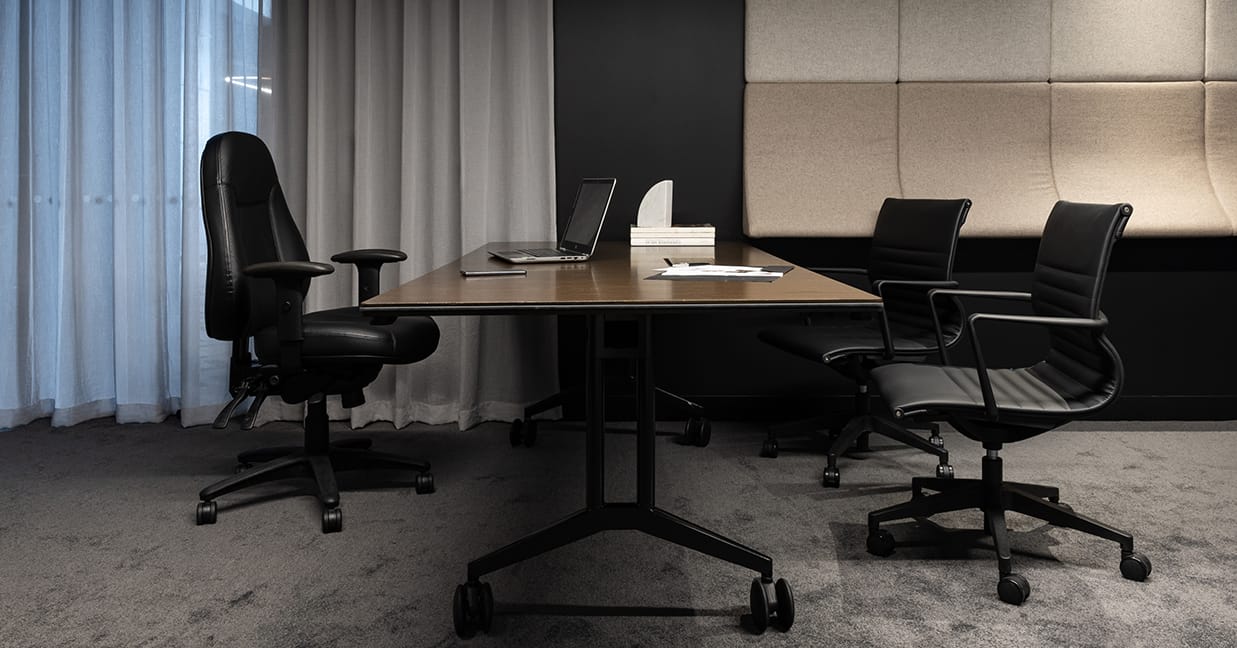
Buro Persona 24/7 leather chair with Buro Diablo PU Vegan Leather chairs.
Why leather suits executive and high-use environments
Leather is dense and well-padded, with a smooth feel that softens over time as it moulds to regular use. It's more enveloping than mesh, less reactive, and a lot of people prefer that for long hours at a desk.
Cleaning is simple. Spills wipe off, and leather doesn't hold onto moisture the way fabric does. In a shared or high-traffic environment, that saves time. It also lasts. A well-maintained leather chair can go many years before showing real wear, which makes the higher upfront cost easier to absorb.
The trade-offs of leather office chairs
Heat is the main complaint, and it's a fair one. Leather doesn't breathe, so it can get uncomfortable in summer or in offices without good air conditioning. If you're in a warmer part of Australia and working without climate control, it's worth factoring in before you buy.
It also needs more upkeep than fabric or mesh. Regular conditioning keeps it supple, and without it, sun exposure can cause leather to dry out and crack over time. Cost sits at the top end. And if animal products are a concern, PU leather delivers a similar look without that issue.
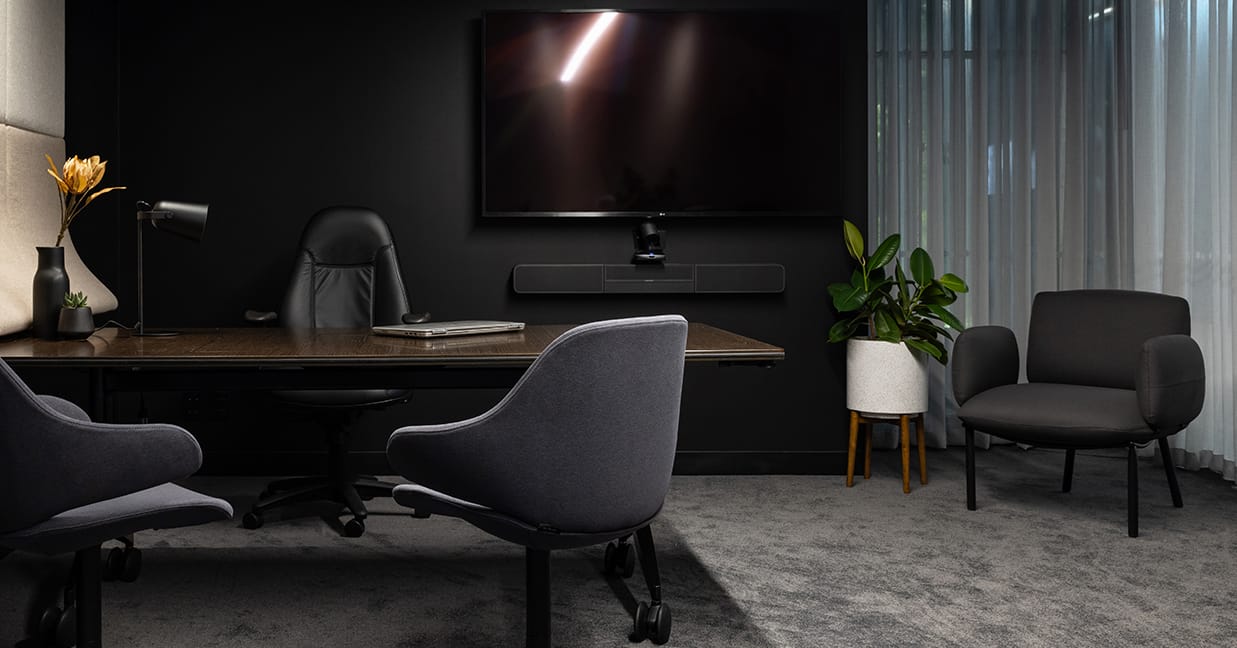
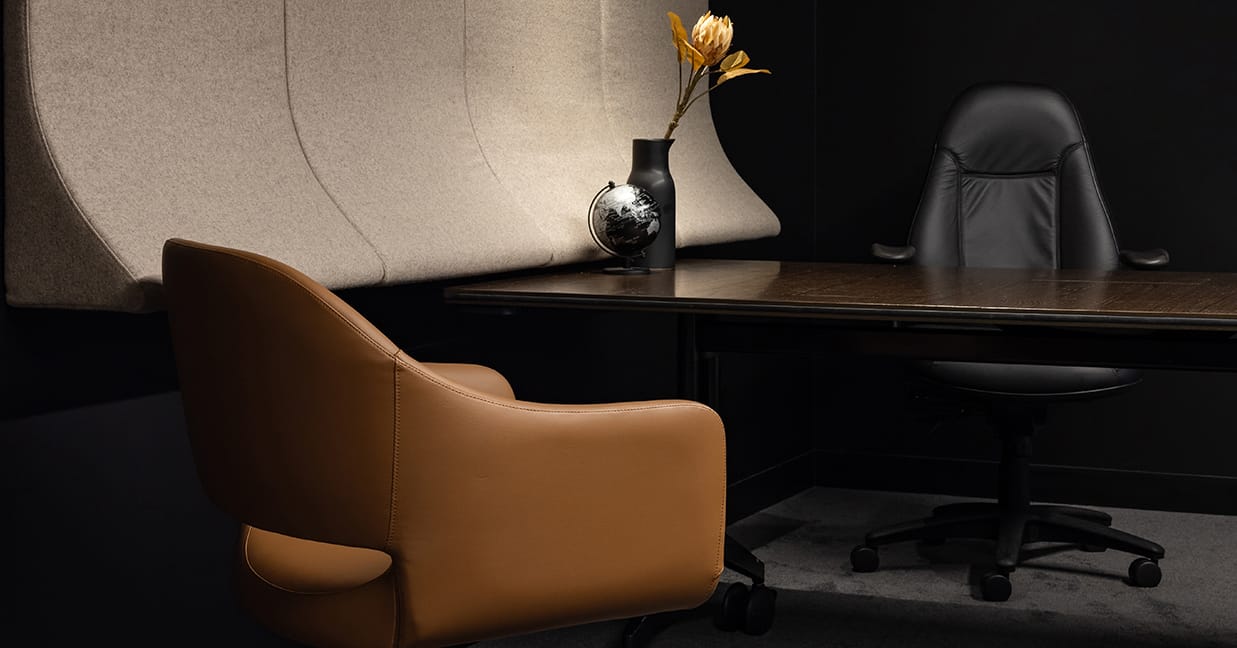
An executive office featuring the Buro Persona 24/7 office chair, Konfurb Orbit chairs and the Konfurb Nebu Armchair.
Fabric office chairs
Fabric is a solid all-rounder. It's comfortable, comes in a wide range of colours and textures, and sits at a more accessible price point than leather. For general office use, it covers most needs well.
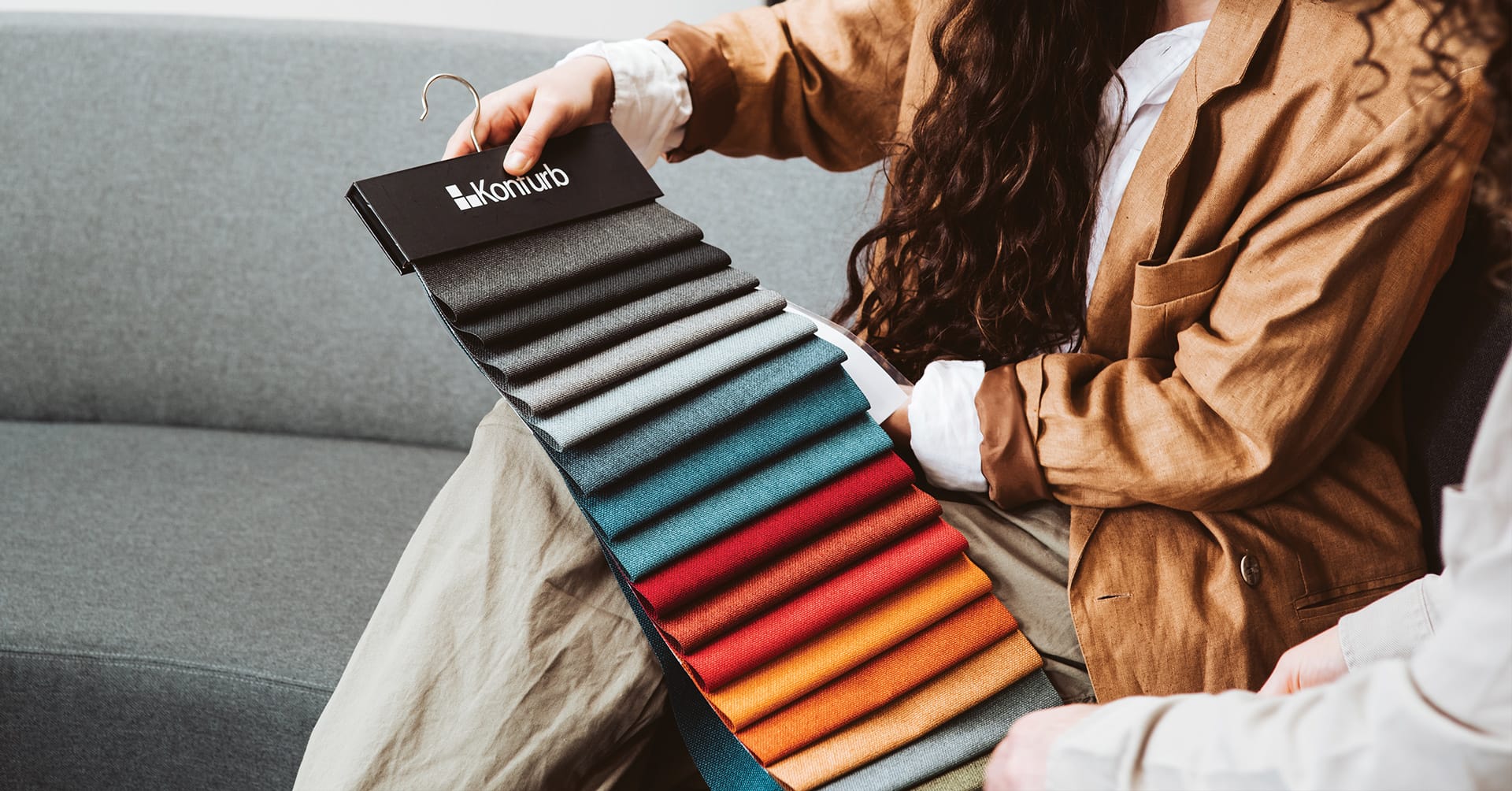
Buro's fabric chairs include the Buro Roma High Back and the Buro Mentor Upholstered, both featuring fabric over moulded foam for day-long comfort. Fabric is also widely used across soft seating for breakout and social spaces.
Why fabric works well in most office environments
Fabric has a softer initial feel than leather and a warmer contact than mesh. It's not as breathable as mesh, but it performs noticeably better than leather in warmer conditions, which makes it a good option for offices that aren't always well air-conditioned.
Some fabric options are engineered for specific environments. The Buro Roma SafeTex using an anti-bacterial fabric that helps resist staining and degradation, making it a practical choice for healthcare settings or anywhere hygiene matters.
Beyond practicality, fabric also plays an important role in how a workspace feels. As Liz Miles, Managing Director of Sustainable Living Fabrics, explains:
"Designers and architects are looking to create environments that are in harmony with nature and promote a sustainable future. Wool upholstery helps to give a textured layered look that lends a warm, welcoming, and comforting ambience to any office space."
"When looking at textiles, durability, fit for purpose, sustainability, longevity, and recyclability are key. At Sustainable Living Fabrics, we aim to design quality Australian-made fabrics that will move with the trends but stand the test of time. Fashion can change, but quality and style endure."
Where fabric chairs have limitations
Fabric absorbs spills rather than repelling them, so it needs more prompt attention when something goes wrong. Over time, it can also show wear more visibly than leather, with pilling, fading, or seat foam compression in high-use environments.
It's also worth considering allergens. Fabric holds onto dust and particles more readily than leather or PU, which is worth thinking about in healthcare settings or for anyone with sensitivities.
PU and vegan leather office chairs
PU leather, sometimes called vegan leather, is a synthetic alternative to genuine leather. It looks similar, costs less, and sidesteps the ethical concerns around animal products. For a lot of workplaces, it's a practical choice.
The Buro Diablo is a good example, offering a leather-look finish at a more accessible price point.
Why PU leather is worth considering
Visually, it's close to the real thing. PU has the same smooth finish and carries the same sense of polish in formal or client-facing settings.
It's also easy to keep clean. PU doesn't absorb moisture, so spills wipe off quickly and day-to-day upkeep is minimal.
Where PU leather falls short
Breathability is the same issue as genuine leather. PU traps heat, so in warm conditions or without good air conditioning, it can get uncomfortable. If airflow matters to you, mesh or fabric is a better choice.
Durability is where the two part ways. PU can crack, peel, or delaminate over time, particularly with heavy daily use or regular sun exposure. A well-maintained leather chair will generally outlast it.
Which office chair material is right for you?
The right material comes down to where you work, how long you sit, and what matters most to you day to day.
Mesh is the practical choice for warm environments and long hours. Leather suits formal settings where appearance and durability are the priority. Fabric covers most general office needs well and gives you more flexibility on colour and finish. PU leather is worth considering if you want a leather aesthetic without the price or the ethical concerns.
Whichever material you go with, the best chair is one that supports you comfortably throughout the workday.
Browse Buro's full range of ergonomic chairs to find the right fit for your workspace.