Spend a shift in a control room, and you quickly understand why a quality ergonomic chair matters. Operators may be seated for eight to ten consecutive hours, tracking multiple screens, managing live communications, and making time-critical decisions with limited opportunity to stand or move. The environment demands sustained concentration, and the body absorbs the cost of that. Fatigue builds from the seat up.
Chairs in these environments also fail earlier than they should. Not because of product defects, but because they were specified for a single-shift office environment and deployed in a continuous one. A chair running across three rotating shifts accumulates more use in four months than a standard office chair does in a year. This guide covers what separates a true 24/7 chair from a standard one and what procurement teams need to confirm before placing a volume order.
What makes a true 24/7 chair different
Construction built for continuous use
A standard ergonomic chair is designed, tested, and rated for single-user, single-shift use. A true multi-shift chair is built to a different specification entirely. Heavier-gauge mechanism components are rated for higher cycle counts. A reinforced gas-lift cylinder built for greater load frequency. A base engineered to absorb the lateral stress of repeated swivelling, reclining, and weight transfer from multiple users across uninterrupted shift cycles.
Seat foam density and upholstery durability differ materially, too. Standard chair foam is not rated for the compression volume of three-shift, seven-day use. Under that load pattern, it degrades faster, loses shape, and delivers progressively less support, often well before the chair shows any visible sign of wear.
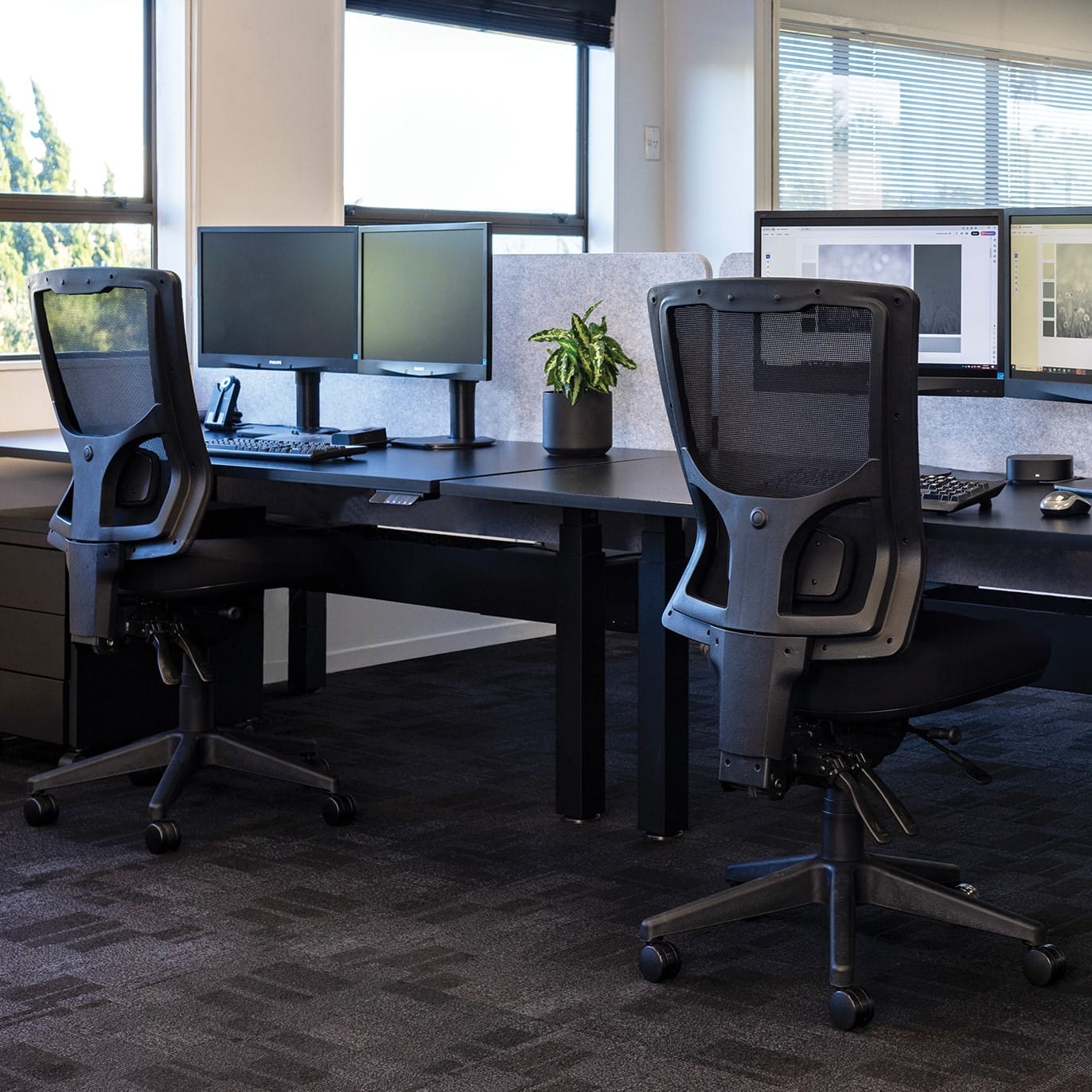
High-density moulded foam, as specified on the Buro Metro II 24/7, holds its profile under variable and continuous load in a way standard foam does not.
Weight ratings in context
Weight rating is often the first number procurement teams look at. It also needs to be read carefully. A chair rated to 150kg for standard office use is not the same as a chair rated to 150kg for 24/7 multi-shift operation. The conditions behind that number are fundamentally different. AFRDI 142 certification tests chairs under continuous-use conditions specifically. The weight rating on a certified chair refers to sustained performance under those conditions, not peak load tolerance in a standard office setting.
The Maverick 24/7 Controller Chair is AFRDI 142 certified to 185kg under multi-shift conditions, with the Buro Guarantee extending cover to 200kg. That distinction matters when specifying for a shift population with users across a wide weight range.
Understanding AFRDI 142 certification
AFRDI 142 is the Australian and New Zealand standard for swivel office chairs under intensive-use conditions. It tests strength, durability, stability, and safety under simulated continuous multi-shift operation, is awarded through independent laboratory testing, and must be renewed every three years. Buro's essential guide to office chair certifications covers the full landscape in detail.
One point worth confirming before a volume order: each design variation is tested separately. A chair certified in its standard configuration is not automatically certified with optional arms, alternative castors, or non-standard fabrics. Confirm certification covers the exact configuration being ordered.
Ergonomic considerations for fixed-station environments
Supporting users who cannot step away
Standard ergonomic guidance assumes the ability to stand, move, and take breaks. Control room and operations centre environments often do not allow for that. Operators may be seated for six to ten consecutive hours with limited opportunity to reset posture, and cognitive load in these environments is high. By mid-shift, the effects are physical: lower back fatigue that compounds with each hour, neck stiffness from sustained screen tracking, and a narrowing ability to separate discomfort from the job itself.
Lumbar support adjustability is more critical here than in a general office setting. Depth-adjustable lumbar, as featured on both the Buro Metro II 24/7 and the Buro Maverick 24/7 Controller Chair, allows operators to tune support to their individual spinal profile without leaving the workstation. Seat depth adjustment matters for the same reason. A user perched at the front of a too-deep seat loses lumbar contact and develops a posterior pelvic tilt that accumulates into significant discomfort across a long shift.
The case for a headrest in high-concentration environments
Operators in control rooms and emergency dispatch settings frequently hold their heads in a sustained forward position, tracking multiple screens, monitoring data feeds, and coordinating live communications. By the later hours of a shift, that sustained load translates into cervical fatigue that most operators simply accept as part of the role.
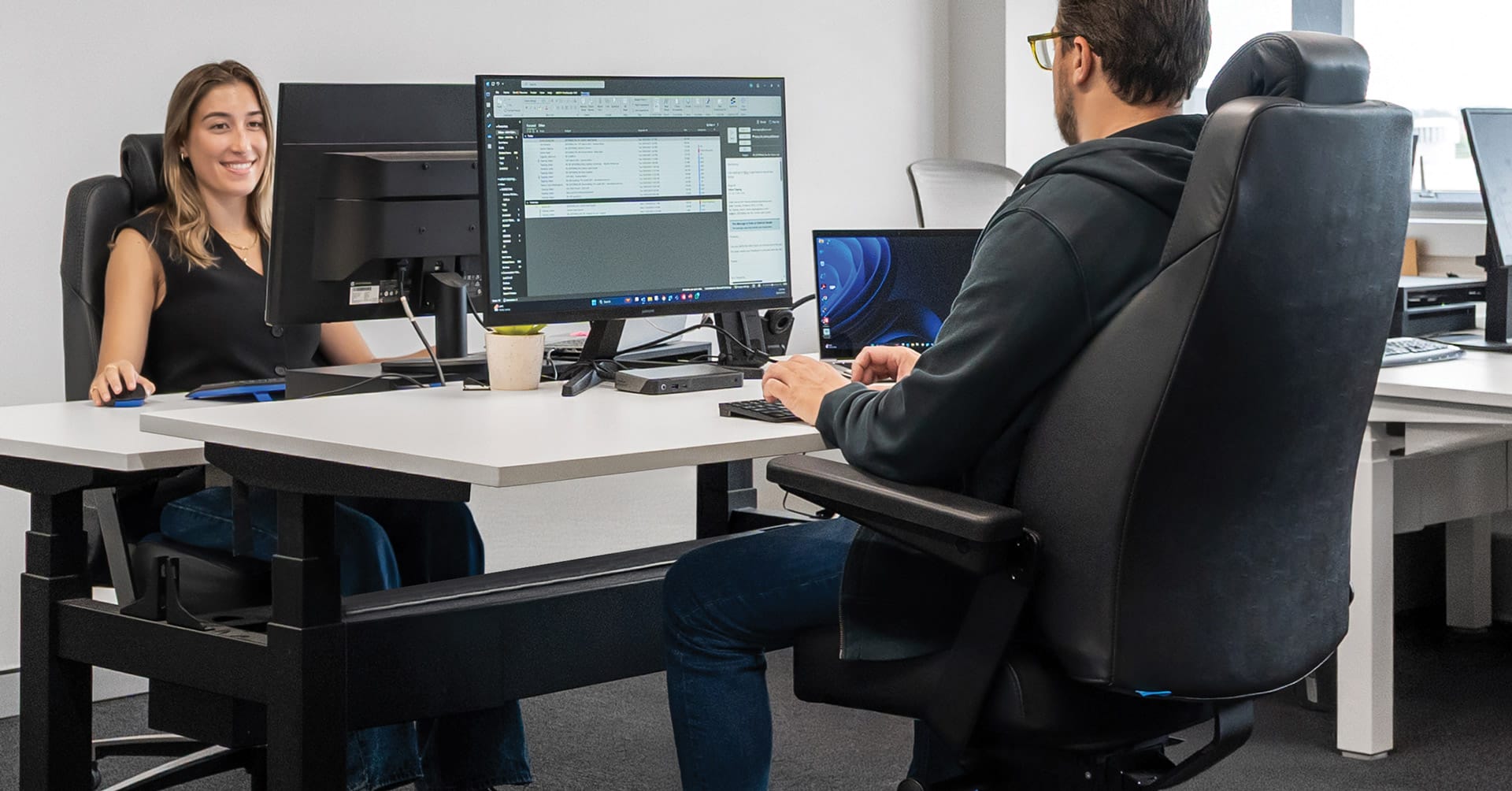
Cervical fatigue under these conditions builds faster than most standard ergonomic assessments account for. The Buro Maverick 24/7 Controller Chair features a height and depth-adjustable headrest designed for sustained, concentrated use. It accommodates different operator heights and can be repositioned without tools between shifts.
Specifying for multi-shift shared use
Fabric selection and hygiene
A control room chair occupied by three different operators across a 24-hour period accumulates contact time that a single-user chair does not. Standard fabric upholstery in this context carries hygiene implications, particularly in environments with infection control obligations. The Buro Metro II 24/7 is available with SafeTex upholstery, a fabric treatment that inhibits bacterial growth and is designed for high-contact, multi-user environments. For environments where surface disinfection between users is protocol, the Buro Persona 24/7 offers leather and PU upholstery options with wipe-clean surfaces.
Adjustability reset between users
A chair carrying the previous operator's settings into the next shift creates ergonomic risk. Lumbar support positioned for a 165cm operator will not suit a 190cm one. Specifications for shared-use environments should prioritise intuitive, tool-free adjustment across all key dimensions. The three-lever mechanism on the Buro Metro II 24/7 and the four-lever mechanism on the Buro Persona 24/7 are designed for this, with multiple adjustments accessible from the seated position in the brief window between shifts.
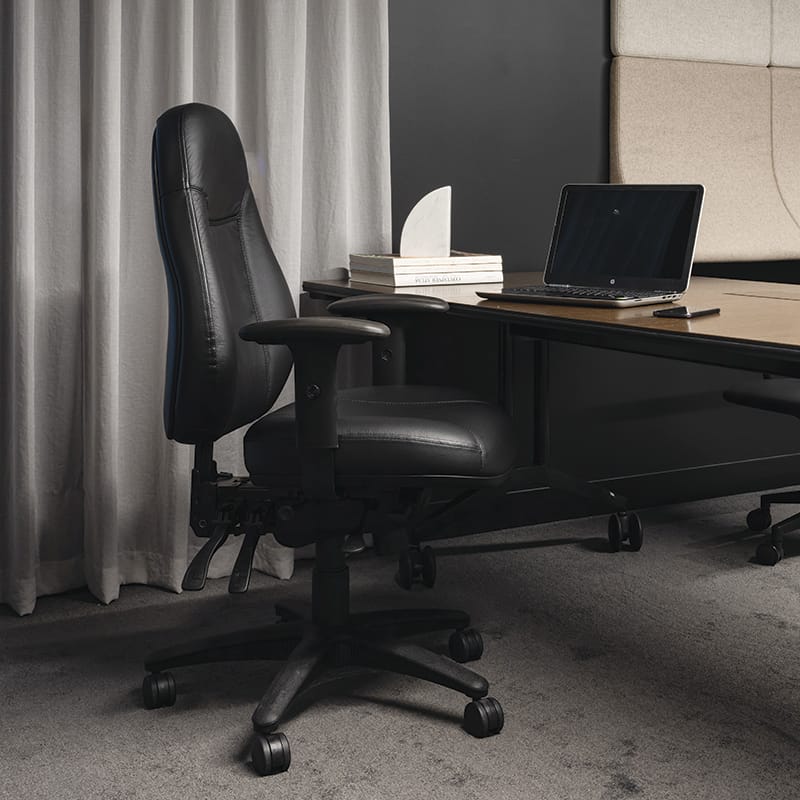
The Buro Persona 24/7 in leather for easy cleaning.
Getting the specification right
A well-specified 24/7 chair reduces replacement cost, limits WHS exposure, and supports operator performance across the full life of a fit-out. The specification decision is the most cost-effective intervention point. For the operators who depend on that environment shift after shift, it is also the difference between a role that is physically sustainable and one that quietly isn't.
To discuss volume requirements or arrange a trial for your environment, find a Buro reseller near you.