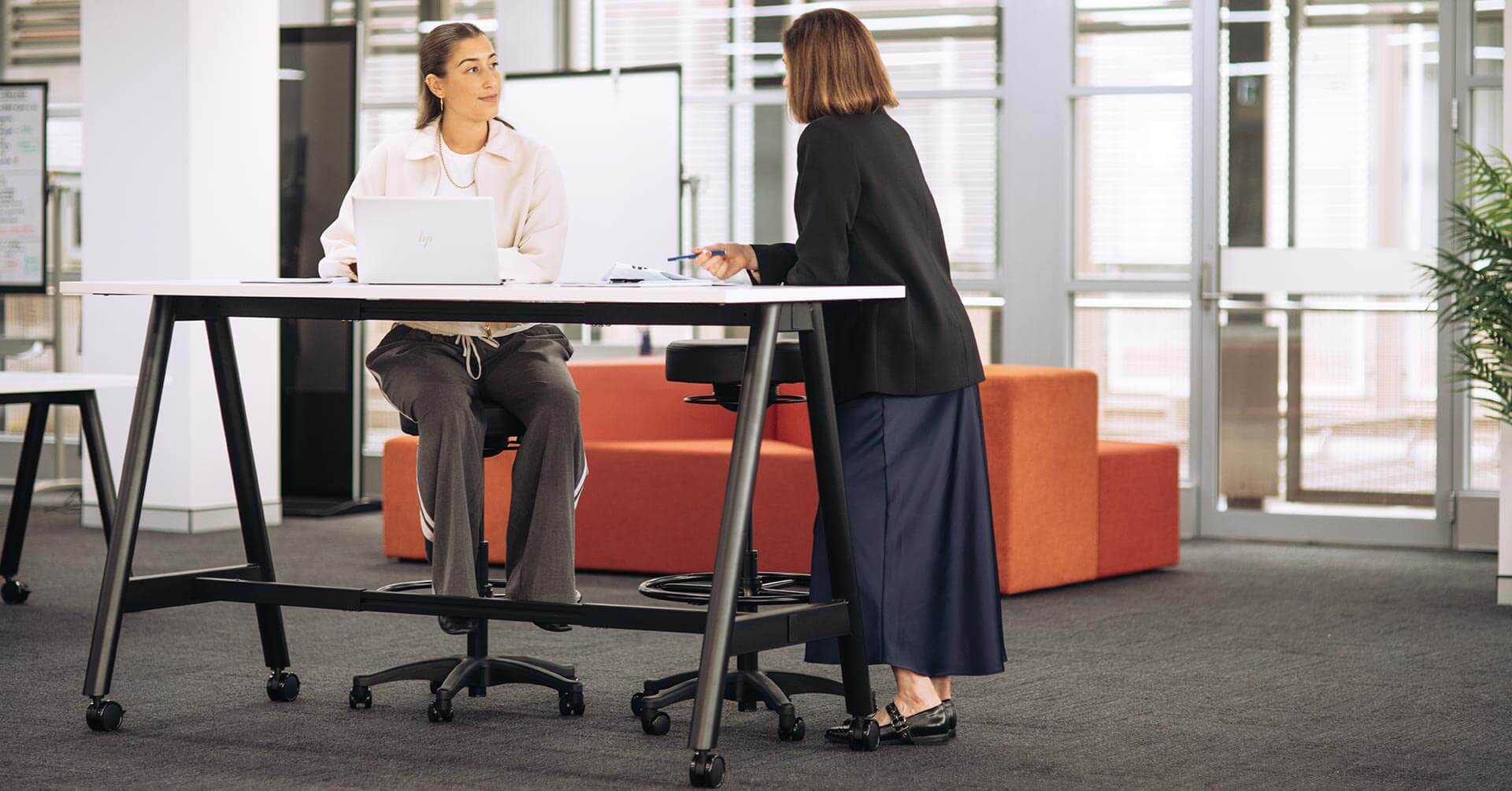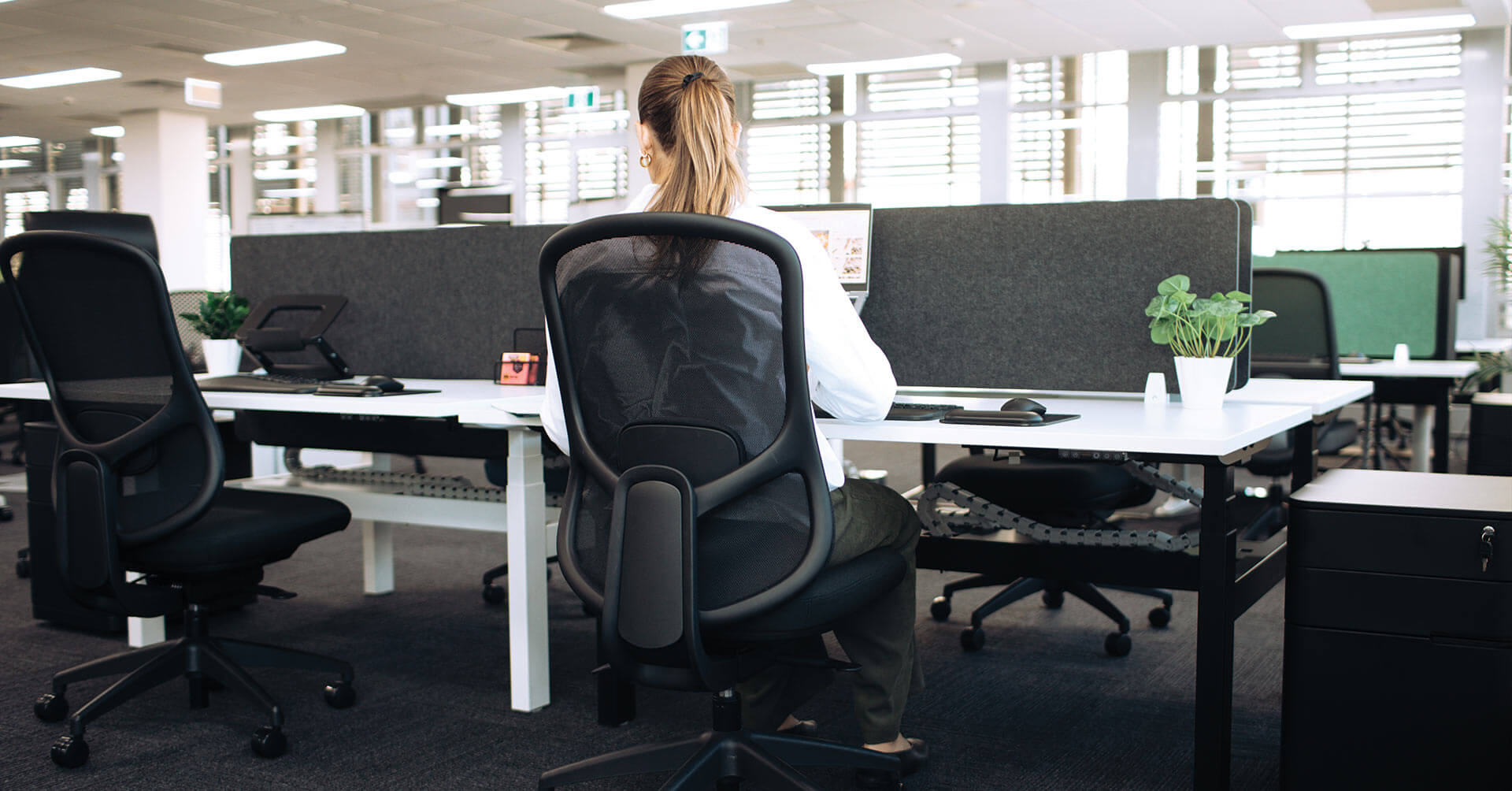

Spend a day at a reception counter or a raised lab bench and it quickly becomes clear that standard seating doesn't always suit the task. A bar stool may provide the height, but not the support needed for long periods of focused work. A standard office chair offers support, but often lacks the range to comfortably reach the surface.
A drafting chair exists to bridge that gap. Designed specifically for counters, benches and other raised work surfaces, it combines the support and adjustability of an office chair with the height range needed for elevated workstations. Choosing the right one comes down to understanding what makes these chairs different, then matching that to the surfaces and people in your workspace.
What makes a drafting chair different
A drafting chair isn't just a taller office chair. Four things set it apart, and each one earns its place.
- Architectural gas lift.
A longer-travel cylinder lets the seat reach heights a standard gas lift cannot, so you can match a counter or raised bench rather than falling short of it. - Foot ring.
At counter height, your feet no longer reach the floor, and an unsupported leg puts pressure on the underside of the thigh and pulls you into a slump. A foot ring restores support and lets you hold a roughly 90-degree knee angle. - Mechanism.
This controls how the seat and back move with you through the day, keeping you supported as you shift between tasks instead of locking you into one position. - Seat shape.
A drafting seat is built for a semi-perched posture rather than a deep-seated one, which suits the forward-leaning way people work at raised surfaces.
If you want the detail on how bases, cylinders and foot rings fit together, our guide to ergonomic office chair parts breaks it down.
Drafting chair vs drafting stool
The two get used interchangeably, but they suit different work. A drafting chair has a backrest and lumbar support, which makes it the better choice for longer, focused sessions at a fixed station. A drafting stool is usually backless and built for movement. It supports quick transitions on and off the seat, and short bursts of task work at a bench or counter.
As a rule of thumb, choose the chair when someone stays put and needs postural support, and the stool when they move constantly and value freedom over the seat back. A lab technician crossing between benches or a staff member on a service counter often works better on something like the Buro Polo Drafting Stool, which swivels and tilts to keep the core engaged.

The Buro Polo Drafting Stool promotes postural shifts with it's 360° seat tilt.
The adjustments that matter, and how to set them
Drafting chair or stool, whatever you choose, a handful of adjustments do the real work. Look for a foot ring that raises and lowers independently of the seat, so you can set knee angle and seat height separately. Check the seat height range covers your surface. Lumbar support matters for anyone holding a position for hours, and a seat with a waterfall front edge keeps pressure off the back of the legs.
The most common mistake is guessing the height. Measure your work surface at its tallest point, then allow roughly 200 to 300mm between the surface and the seat. In practical terms, a standard desk sits around 730mm, while a bench or counter often runs to 900mm and above, which is exactly where a normal chair falls short. Buro drafting models are built for that gap. The Buro Polo Drafting Stool runs a 245mm architectural gas lift, and the Mondo Tivoli Drafting Chair a 270mm lift with a seat height range of 650 to 910mm.
Matching the drafting chair to your space
Drafting chairs have traditionally been associated with architectural studios, laboratories and reception counters. Today, they're also finding a place in collaborative settings, shared workspaces and standing-height work areas.
As workplaces become more varied, employees move between different settings throughout the day. A workstation might support focused work, while a high table is used for project discussions, informal meetings or quick tasks between appointments.
Studios and drawing boards
Designers and architects at a drawing board hold focus for long stretches, so they benefit from a supportive back and a comfortable, adjustable seat. The Buro Roma Mid Back Drafting Chair pairs an architectural gas lift and foot ring with a genuinely comfortable seat for that kind of sustained work.

The Buro Roma Mid Back Drafting Chair comes in black, grey, blue, red or green coloured seat and back.
Labs and technical benches
Technical and clinical spaces need seating that wipes clean and copes with raised benches. A chair like the Buro Enso, available with a standard or drafting gas lift and a non-porous surface, suits sterile and hard-wearing environments.
Reception and service counters
Front-of-house seating is on show, so it needs to look considered while still reaching counter height. The Buro Elan Drafting Chair brings a breathable mesh back and height-adjustable lumbar support to a sleeker frame for reception and service points.
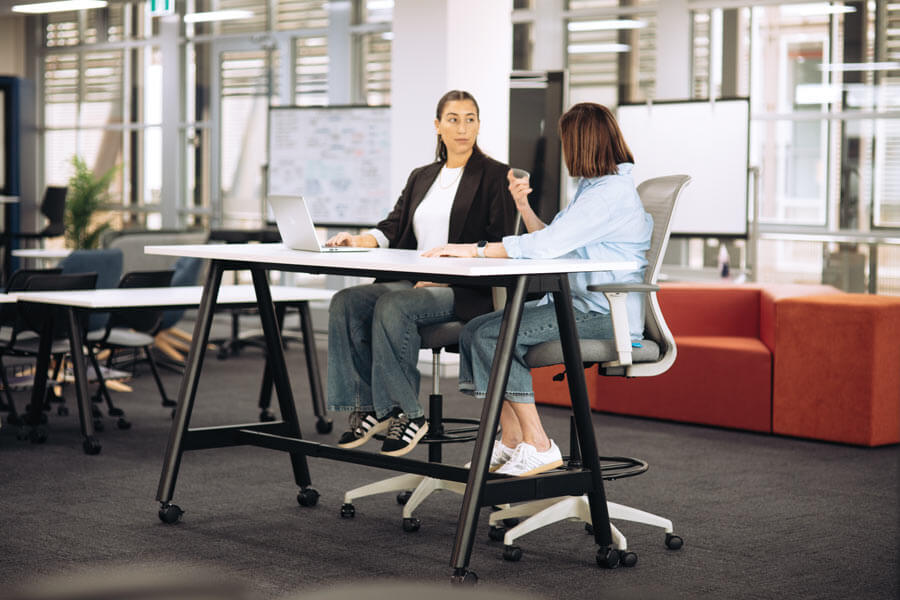
The Buro Elan Drafting Chairs pair with a high table for a meeting breakout space.
Sit-stand and shared workspaces
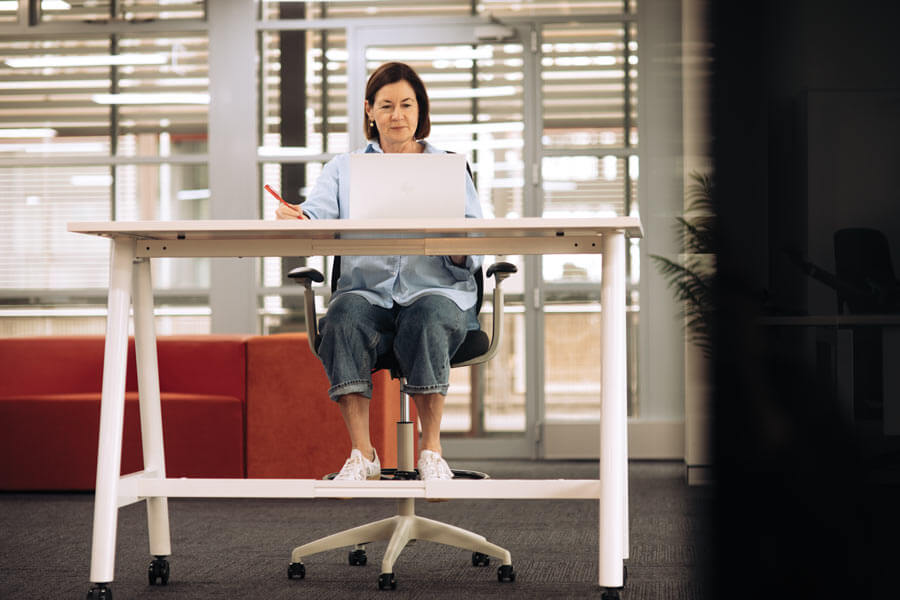
Many workplaces now include high tables, bar leaners, standing-height meeting tables and touchdown spaces that give people more choice in where and how they work. Part of the appeal of these spaces is movement. Employees can stand for a quick discussion, perch for a short task or sit when they need a more stable and supported position.
In shared and hot-desk settings, a self-adjusting chair such as the Buro Force Drafting Chair with Buro Dynamic Intelligence™ suits multiple users without manual resetting between them. To pair one with a matching high work surface, see the Buro MyWorkSpace High Training Table.
Built to last in a commercial setting
Because a drafting chair works harder and lasts longer in a commercial setting, the specification matters as much as the look. AS/NZS 4438 compliance, GreenGuard certification for low emissions, Australian Physiotherapy Association endorsement and ANSI/BIFMA testing show that a chair is built for long term performance.
A good drafting chair earns its place on reliability, on a design that moves with the user, and on a fit that suits the space.
Finding the right drafting chair
The best drafting chair is the one that matches both the height of the work surface and the way people use it.
Whether that's a laboratory bench, reception counter, drawing board, high table or collaborative workspace, the goal is the same: providing comfortable support where work actually happens.
As workplaces continue to offer more variety in how people work, ergonomic support needs to extend beyond the traditional desk.
When you are ready to compare options for your own workspace, browse the full range of drafting chairs to find the fit for how your team works, then talk to your nearest Buro dealer to try them in person.