If you’re choosing seating for a raised workspace, it’s easy to focus on one thing: does the seat go high enough?
But drafting chairs, office stools and active stools can all get people working at height. So how do you know which one to choose? These three seating options are all designed for different ways of working, and what matters more than how high a seat can reach is how that seat will be used.
How long will people be sitting? How often do they move around? Do they need full back and foot support, or a seat they can perch on briefly between tasks?
Answer those questions first, and choosing the right seat becomes much easier.
Drafting chairs: sustained work at an elevated surface
If someone will be sitting at a raised surface for a significant part of the day, a drafting chair is usually the best fit.
Think laboratory benches, drafting tables, reception counters, or workshop benches where the work itself happens at height. A drafting chair offers the height of a stool, with the support and adjustability of an ergonomic task chair.
That typically means a supportive backrest, adjustable seat height and a foot ring, so people aren’t left with their feet dangling once the chair is raised.
The Buro Elan Drafting and Buro Force Drafting are both built on the same adjustable platforms as their task-chair versions. You can compare backrest and foot ring options across the full range of drafting chairs.
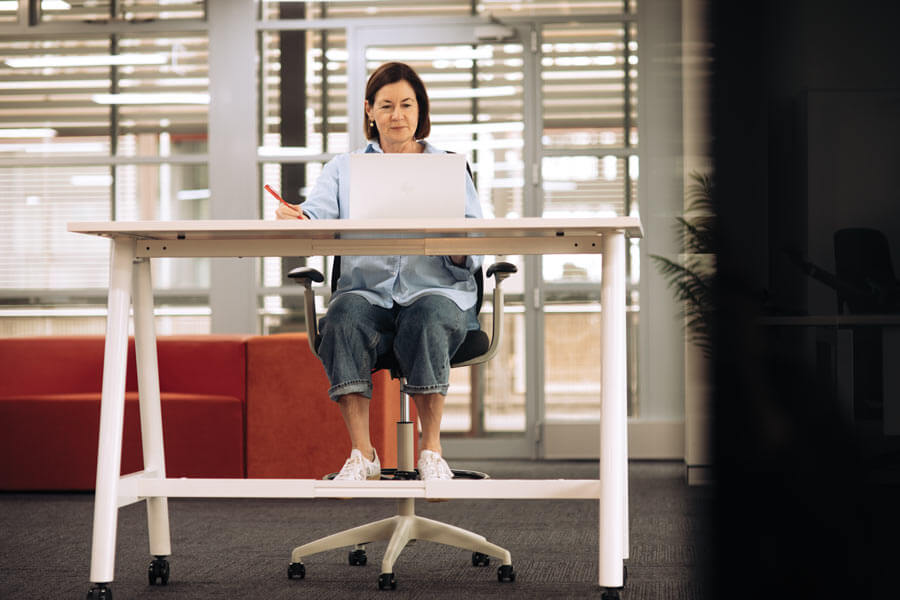
Office stools: short, mobile, task-based sitting
For people who regularly move between tasks, an office stool can be a better fit than a full drafting chair.
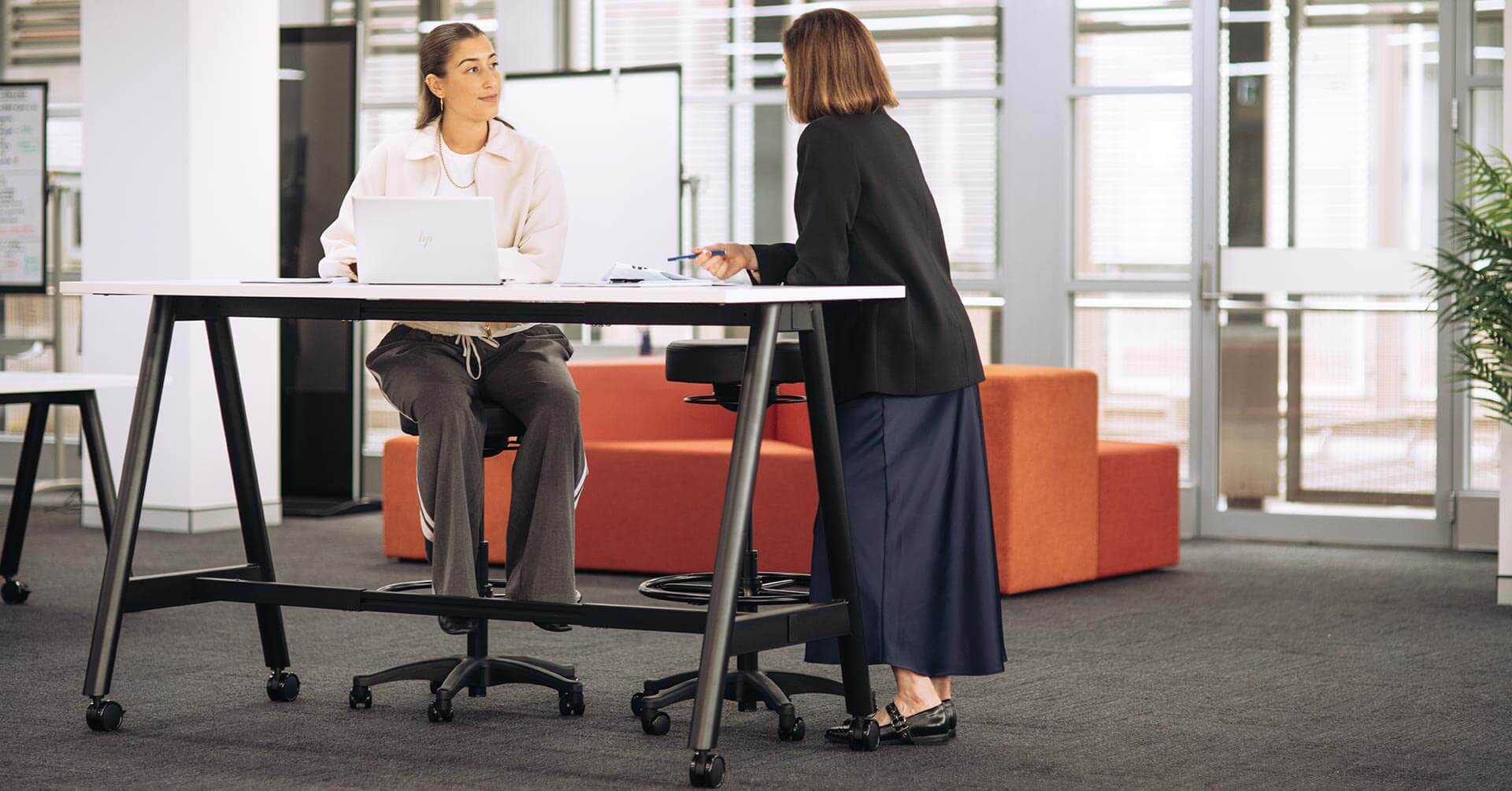
In offices, these stools are useful in informal spaces with high tables; the sorts of places people might sit for a quick review or an informal chat before moving on to another task. They’re also well suited to healthcare, retail, hospitality and service settings, such as hair salons and beauty clinics, where staff need to move easily throughout the day.
Some drafting stools sit somewhere between a traditional office stool and a full drafting chair, offering extra height and support while still keeping the seat compact and easy to move around. But generally speaking, most office stools have less back support than a drafting chair, making them better suited to short or medium periods of sitting.
The Buro Polo Drafting Stool is height-adjustable and lets people rock, swivel and shift as they work. It suits raised work surfaces, high tables and shared spaces where people come and go throughout the day.
Browse backed and backless options in our office stool range.
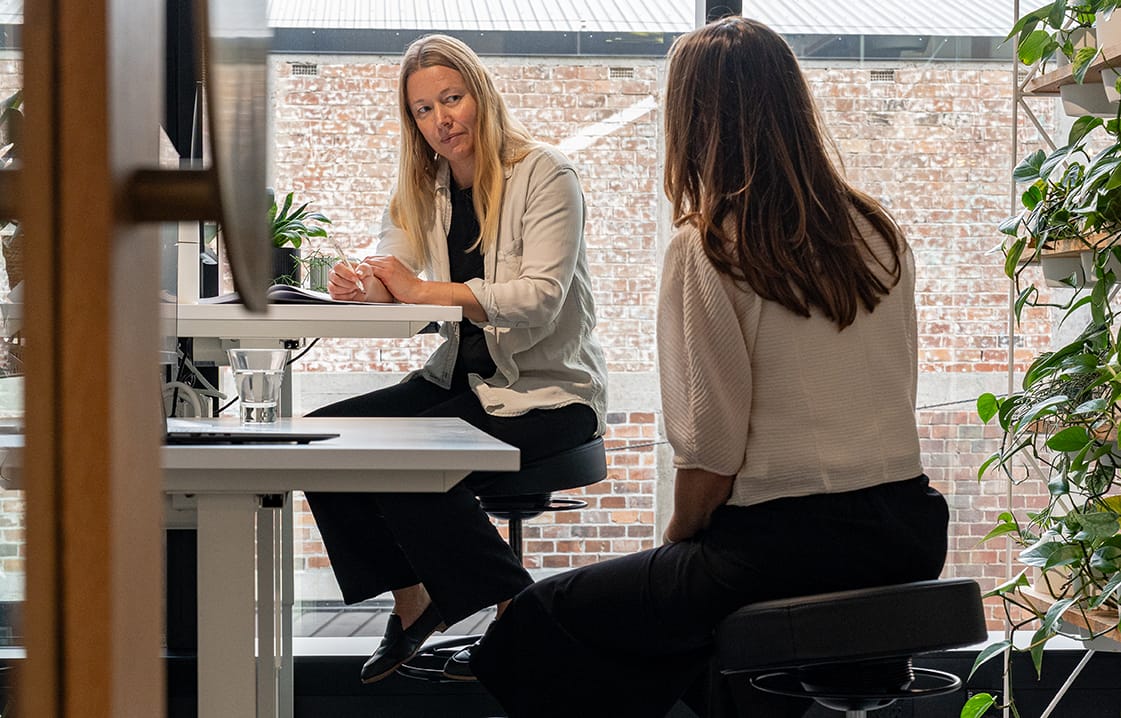
The Buro Polo Drafting Stool promotes postural shifts with it's 360° seat tilt.
Active stools: movement at a sit-stand desk
Active stools are a good fit for people who use sit-stand desks and want more ways to change position throughout the day.
Rather than settling into a supported sitting position, you temporarily perch on an active stool. This makes it easy to take some weight off your feet for a while without lowering the desk or switching to a standard chair.
Many active stools are also designed to rock, tilt or move with your body, keeping the legs and core gently engaged rather than holding you in one fixed position.
They’re best used as one option within a varied workday, rather than as a chair for long periods of sitting.
See the sit-stand and kneeling range for options designed to add more movement to a height-adjustable workstation.
A physiotherapist’s perspective: the best posture is one that changes
Occupational physiotherapist Dave Hall says movement should be a key consideration when choosing workplace seating:
“People often think there is one perfect sitting position, but the reality is our bodies are designed to move. The best workstation set-up is one that easily supports regular posture changes and movement throughout the day alongside being suitable for the tasks that need to get done.”
Workplace stools and elevated seating can help create that variety. They might give someone a chance to sit during a job that otherwise involves prolonged standing, or make it easier to move between seated and standing work throughout the day.
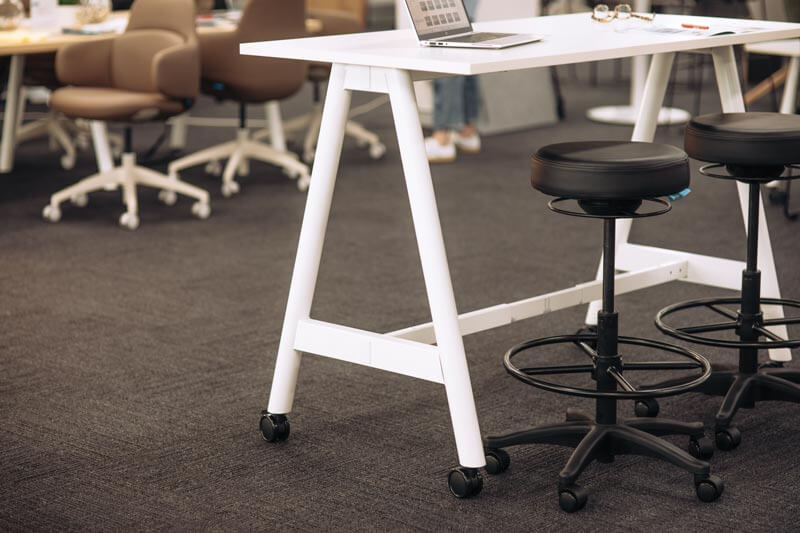
Buro Polo Drafting Stools provide a casual yet supportive seating option with the Buro MyWorkSpace High Training Table.
Choosing between drafting chairs, office stools and active stools
The lines between categories aren’t always clear-cut. Some workplace stools combine elements of drafting, office and active seating, so it’s better to focus on how the seat will be used rather than get too hung up on what category it fits into.
Here's a quick guide to help you understand which seating options are best for what.
| Task chair |
Drafting chair | Office stool |
Active stool |
|
| Best for… | Everyday desk work | Longer periods at an elevated surface | Informal meetings, short tasks, collaboration | Adding movement to standing work |
| Sitting time | Long | Long | Short to medium | Short |
| Support | Full back support | Full back and foot support | Less back support | Minimal support: movement is the focus |
| Typically found at… | Individual desks and workstations | Drafting tables, counters, benches | High tables, healthcare and service settings | Sit-stand desks, flexible workspaces |
Find the right seat for the job
Drafting chairs, office stools and active stools can look similar, but they suit very different ways of working. Choosing well comes down to matching the seat to the task, the amount of time spent sitting and the movement involved.
Deciding which seating option will work best in your space? Find your nearest Buro dealer to compare our range of drafting chairs, office stools and active stools in person.