Hybrid work is now standard across most Australian workplaces. Remote and flexible arrangements have moved from exception to expectation, and with that shift, the office itself has had to evolve. It's no longer just a place where work happens by default. It needs to earn its place in people's weeks.
The good news is that most people still want to come in. The social connections, the collaborative energy, the separation from home, these things matter. What's changed is the expectation of what the office offers when they do.
Employees now expect high-quality spaces that support health and wellbeing, reduce stress and discomfort, and lay the foundation for great work and positive team building. A desk and a screen aren't enough.
That's why touchdown spaces have become an increasingly popular feature of the modern hybrid office. As organisations look to strike the right balance between flexibility and genuine reasons to be in the room, a well-considered touchdown space gives people a purposeful place to land.
What is a touchdown space?
While they might sound like something you'd find on an American football field, a touchdown space can deliver a real boost to your organisation through a few simple design changes.
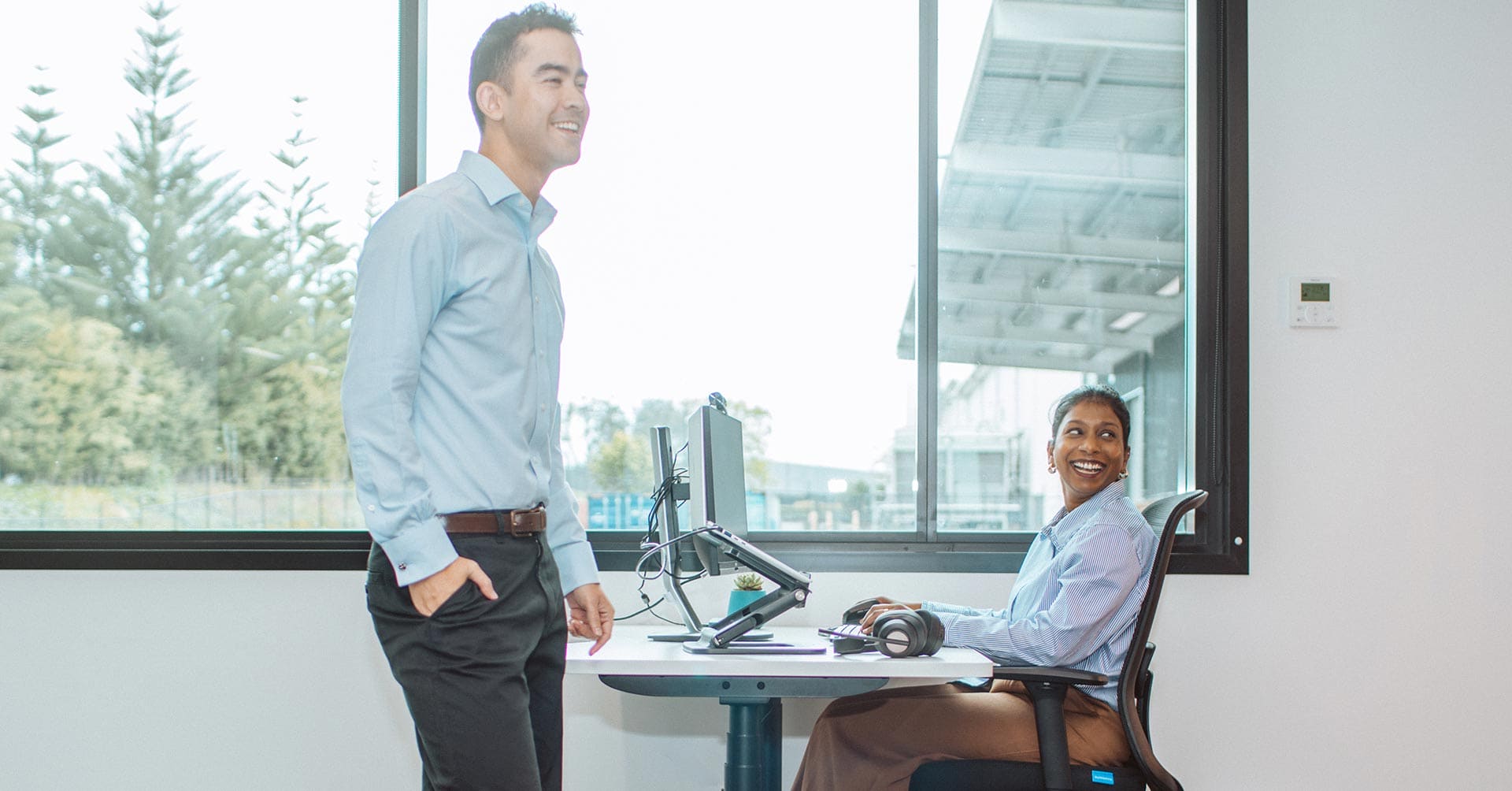
Touchdown workspaces are purpose-built areas for short bursts of focused work, designed for people who are in the office for part of the day. They give flexible and hybrid workers a place to drop in, set up their laptop, and get things done, whether that's focused solo work, a debrief, a catch-up, or a quick meeting.
Unlike assigned desks, touchdown spaces are shared and unowned. They're available on a first-come, first-served basis or bookable in advance, and are typically designed to support a range of working styles rather than a single task. That flexibility is what makes them particularly well-suited to hybrid teams, where no two workdays look the same.
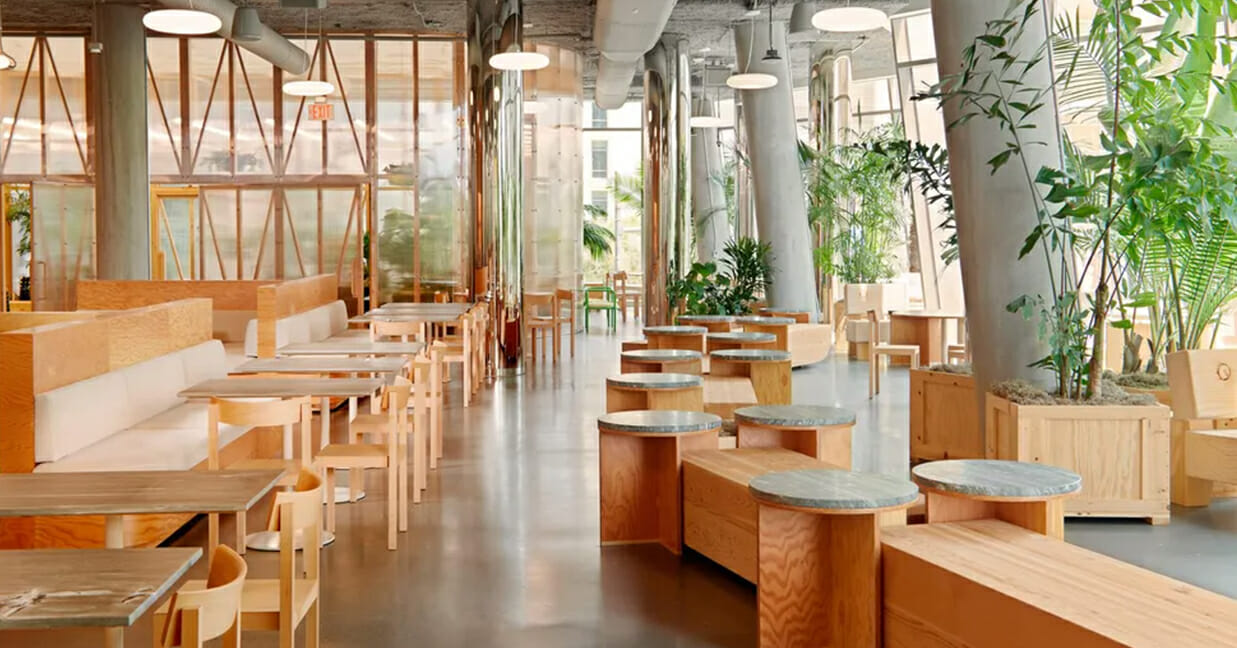
Dropbox's Studios have 'touchdown workspaces' rather than dedicated desks for relaxing or working. Credit : Dropbox
How are touchdown spaces used?
Touchdown spaces work for all kinds of people. Someone splitting their week between home and the office gets a reliable place to set up without needing a permanent desk and chair. A staff member coming in from a client meeting has somewhere to decompress and get back on top of their inbox. A part-time worker or hotdesker can arrive and get straight to work without hunting for a spot.
They also do something less tangible but just as valuable: they give people a reason to move around the office and cross paths with each other. Some of the best team moments happen in shared spaces, not scheduled meetings.
What does a touchdown space include?
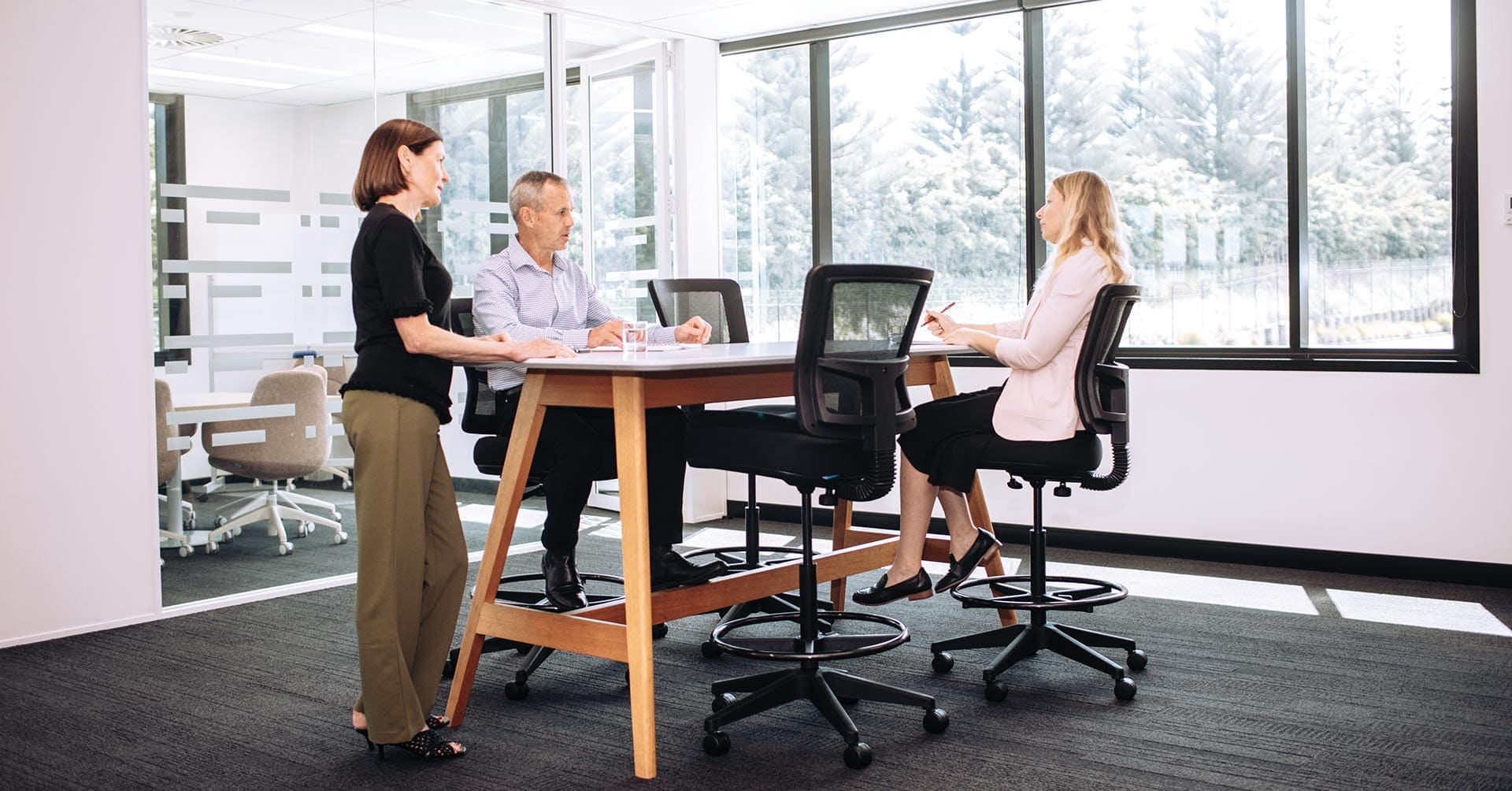
Touchdown spaces can vary depending on an organisation's needs, but generally they're designed to be flexible and adaptable. They usually include a range of soft seating options, alongside workstations like desks and tables. Furniture design in a touchdown workspace often allows employees to create a sense of separation from the rest of the office, supporting focus without full enclosure.
A well-equipped touchdown space will also have everything staff need to be productive: wi-fi, power outlets, and access to printing facilities.
How to design a touchdown workspace
Designing a touchdown space well comes down to understanding how your people actually work. The best ones aren't just empty areas with a few spare chairs; they're intentional spaces that support different tasks, different working styles, and different lengths of stay.
Here are four key factors to consider:
1. Location, location, location
Location is probably the most crucial part of the design process. Where you put your touchdown space will shape how it gets used and how often people actually gravitate toward it.
A spot near the entrance works well for people dropping in briefly between meetings or appointments. Somewhere deeper in the building, away from the main flow of traffic, is better for focused work. Ideally, you'd have both.
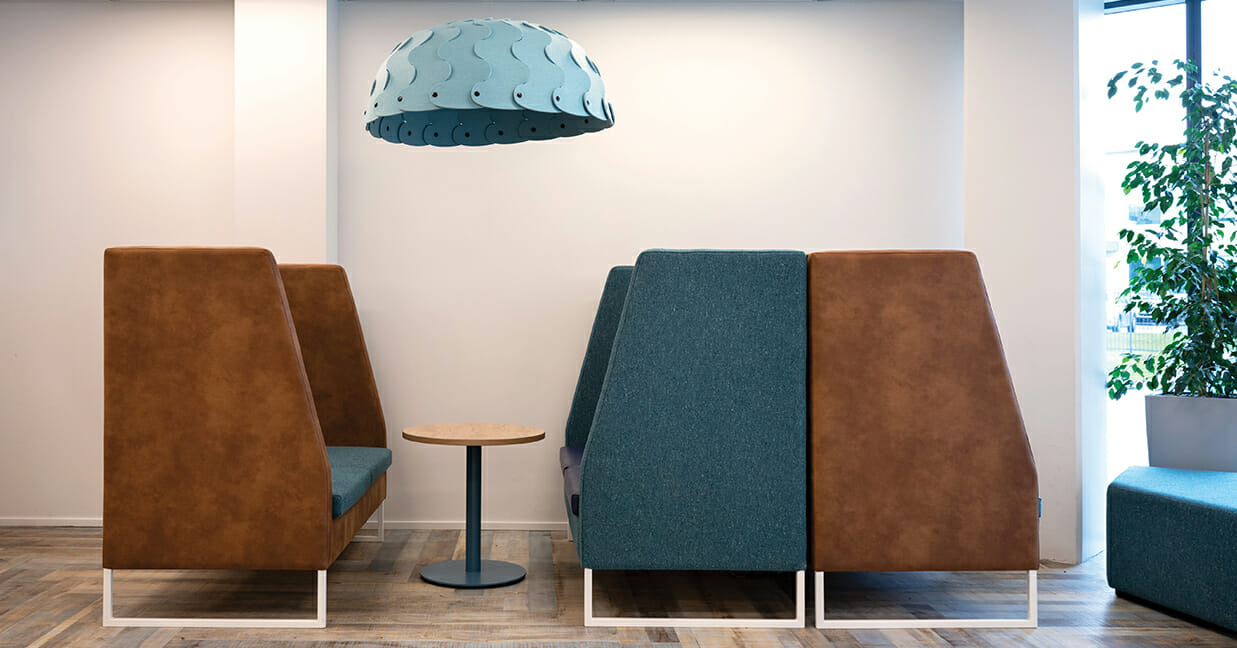
Konfurb Studio 2 seater booths featured in ICT collaborative space, Auckland.
2. Flexibility
A touchdown space should be adaptable and easily reconfigured to suit different tasks and different people. One person might need a quiet spot for solo work. Another might want to pull a few colleagues together for a quick brainstorm. The furniture needs to support both without feeling like a compromise for either.
A useful way to think about it is matching furniture to postures; different tasks call for different ergonomic setups. Focused work might call for a proper chair and desk surface, while a casual catch-up suits a lounge chair or stool. A range of seating options and configurations gives people the freedom to work in whatever way suits the moment.
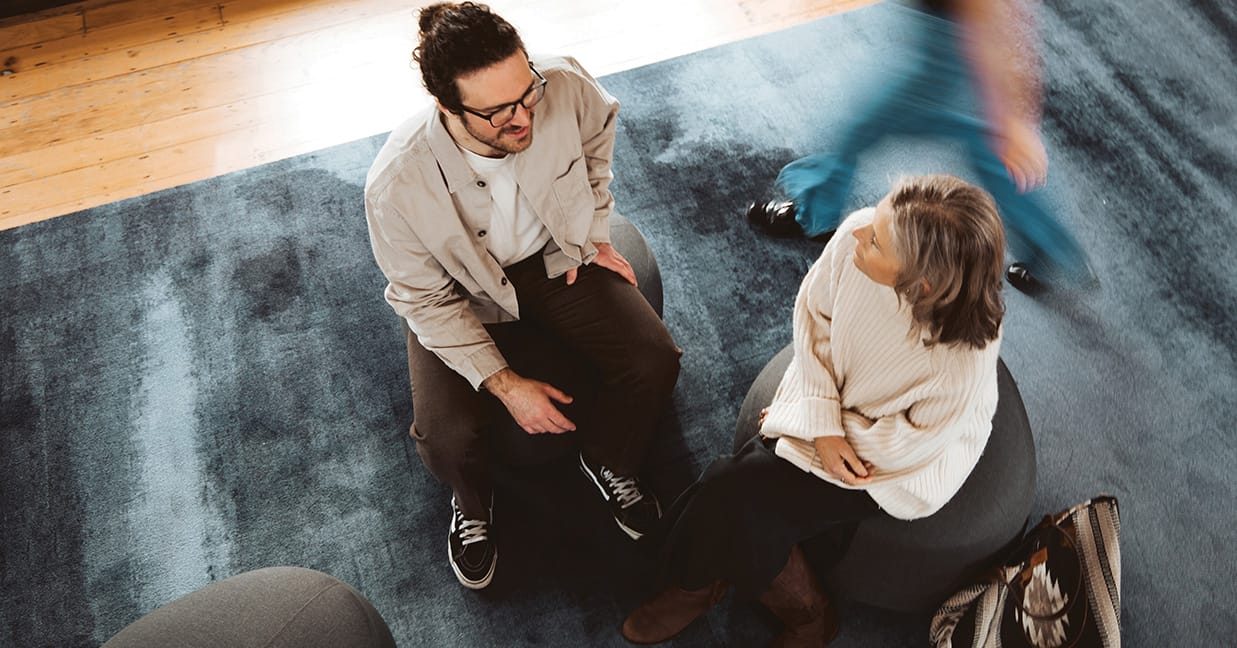
Konfurb Gem Ottomans are a flexible seating option for a quick catch up.
3. Seating options
A touchdown space should offer a range of seating to match the variety of tasks and people using it. Not everyone will be there for the same reason, and not everyone will want to sit the same way.
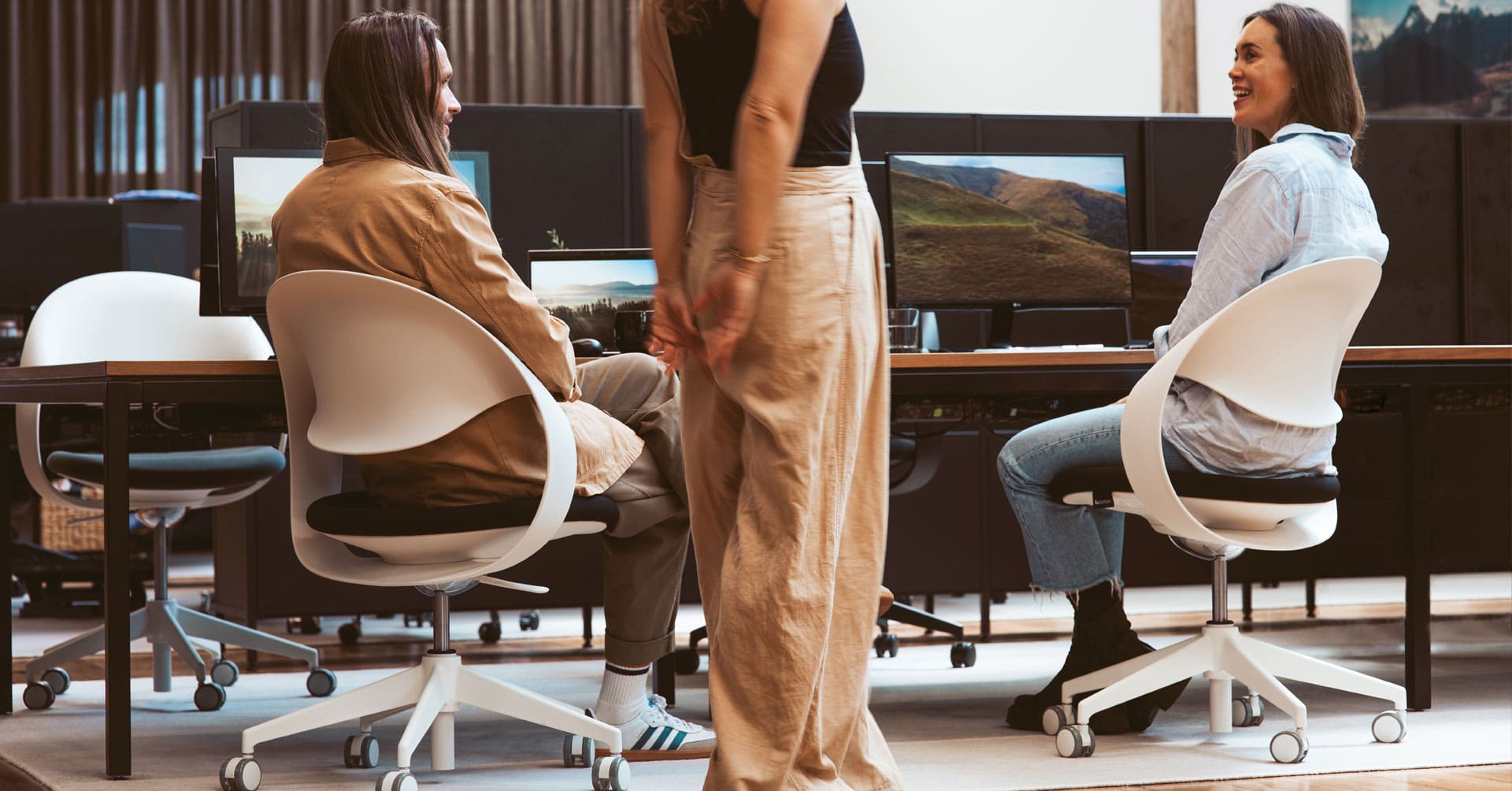
Ergonomic chairs with adjustable height and lumbar support are well-suited to desk-based work, particularly for staff spending a meaningful chunk of their day at a touchdown station. For more casual use, modular soft seating, booths, and stools give people options that match the nature of their work and how long they plan to stay.

Buro Mentor ergonomic chair features Buro Dynamic Intelligence™ technology.
4. Comfort and aesthetics
Your touchdown space should be comfortable and inviting, the kind of environment that makes coming into the office feel worthwhile. Use colours, textures, and artwork that reflect your company's culture and values, and give your staff a subconscious lift.
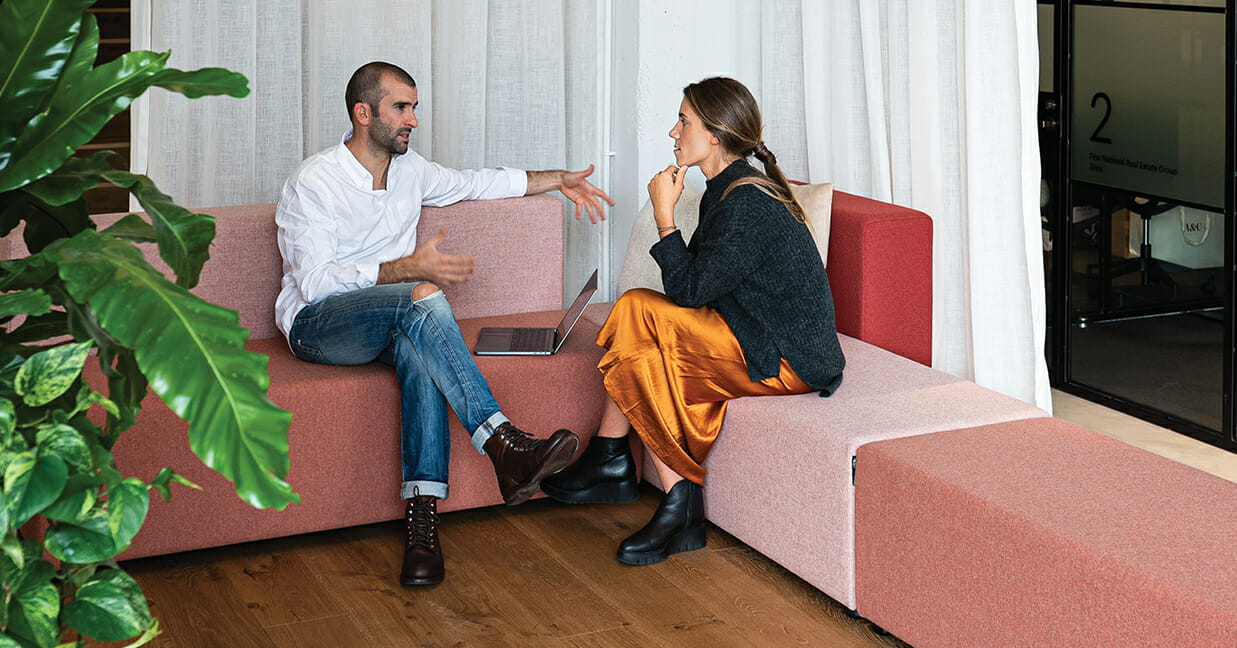
Choose the right furniture for your touchdown space
Buro offers a range of seating designed to suit the varied demands of a touchdown space.
For privacy and focused work, tall-backed booths are a strong choice. The Konfurb Studio creates a quiet meeting environment even in a busy office, with one, two, or three-seater configurations suited to individual work or small group sessions. The modular Konfurb Star offers a more flexible take on the same idea, with eight ottoman, seat, and back combinations and custom fabric options; it can be configured to suit almost any space.
For more active, collaborative zones, the Konfurb Fly Barstool is designed for busy environments where people move between tasks and spaces throughout the day. Available in swivel and sled base options, it offers comfort and support without anchoring people to one spot.
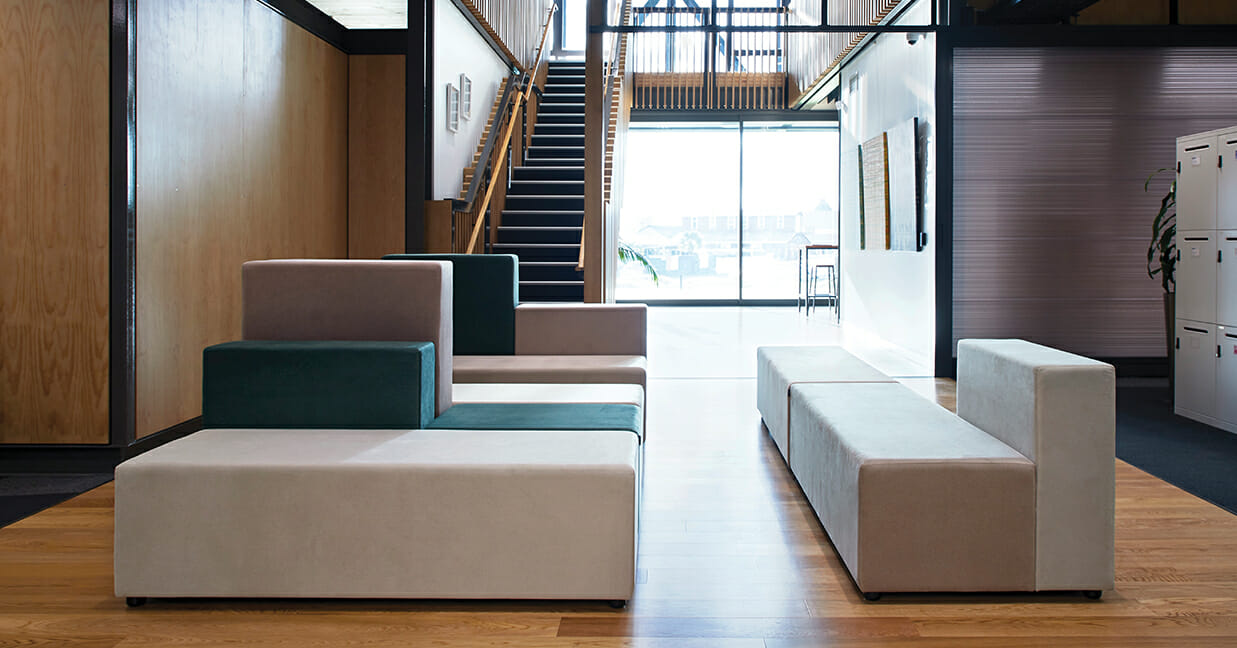
For open-plan touchdown areas, the Konfurb Arco Series and Konfurb Gem Ottoman Series offer customisable soft seating that can be configured to suit any layout, with a range of upholstery options to match your space.
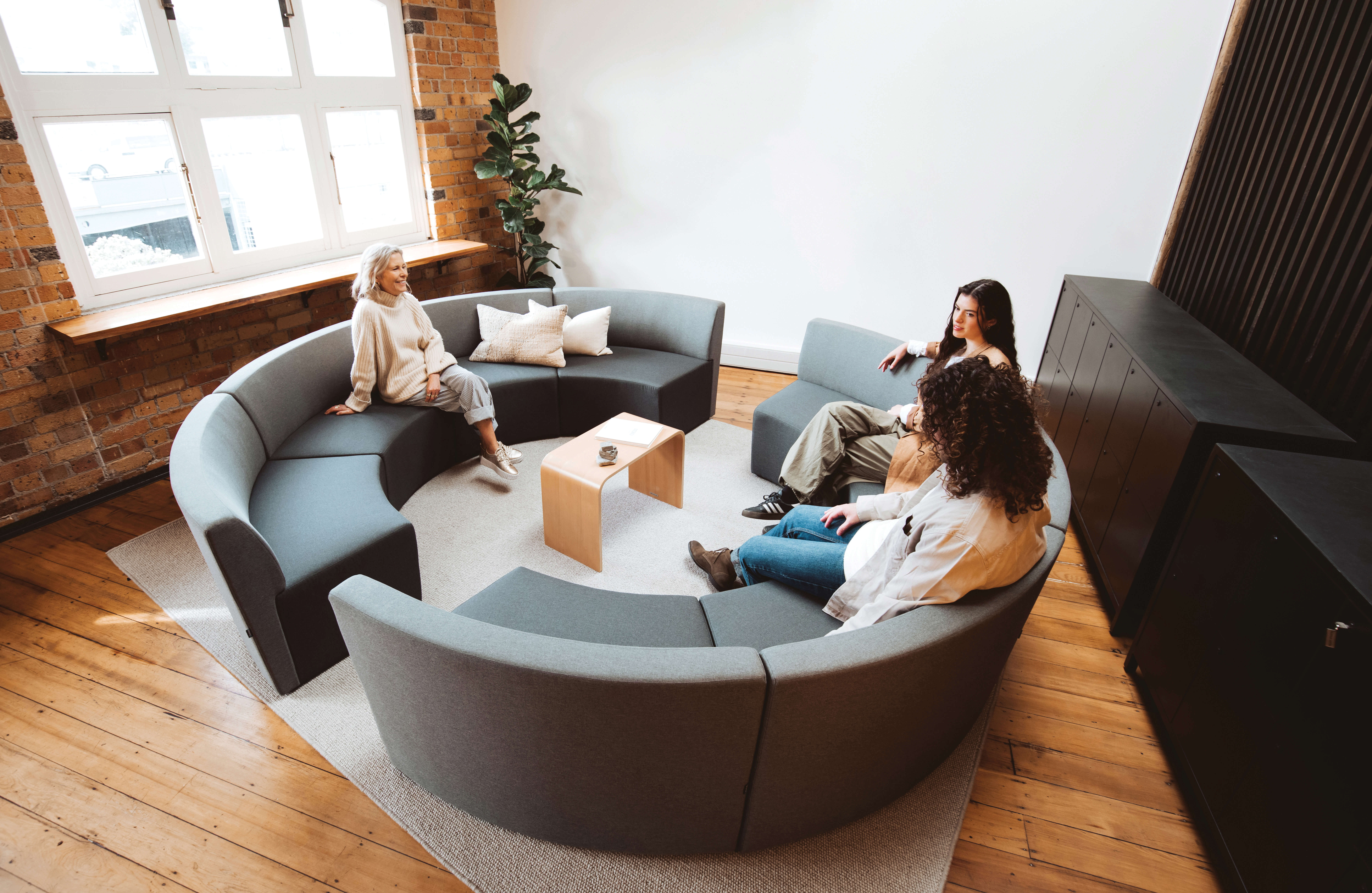
Konfurb Arco Series in the 'Pit' configuration.
Ready to design your touchdown workspace?
Designing a touchdown space that works for your team doesn't have to be complicated. Start with how your people work, what they need when they're in, and how much flexibility the space has to support. The seating choices follow naturally from there.
Check out Buro’s product range to find inspiration or find a local reseller to talk through your options.