Most people walking into a hospital or clinic aren't having their best day. They're anxious, often in discomfort, and the environment around them starts shaping how they feel before anyone says a word.
Furniture plays a quieter role in that experience than lighting or signage, but it's no less significant. A waiting room that feels considered, where the seating is genuinely comfortable, and the layout feels natural, can do a lot to lower the temperature of a difficult situation. The right healthcare furniture doesn't just look appropriate. It supports the people using it and the people working in it throughout the day.
Here's what that looks like in practice.
Hygiene that goes deeper than a wipe-down
Seating in a clinical environment takes a lot more punishment than it does anywhere else. It's cleaned multiple times a day with products that would degrade lesser materials, used by a rotating cast of people across long hours, and expected to hold up for years. That means the decisions around upholstery, construction, and surface finish aren't just aesthetic; they have real implications for infection control and long-term durability.
The good news is that meeting these requirements doesn't mean the space has to feel cold. A chair can have anti-microbial upholstery and still look warm. Hygiene and good design aren't in conflict; it's a matter of knowing what to specify.
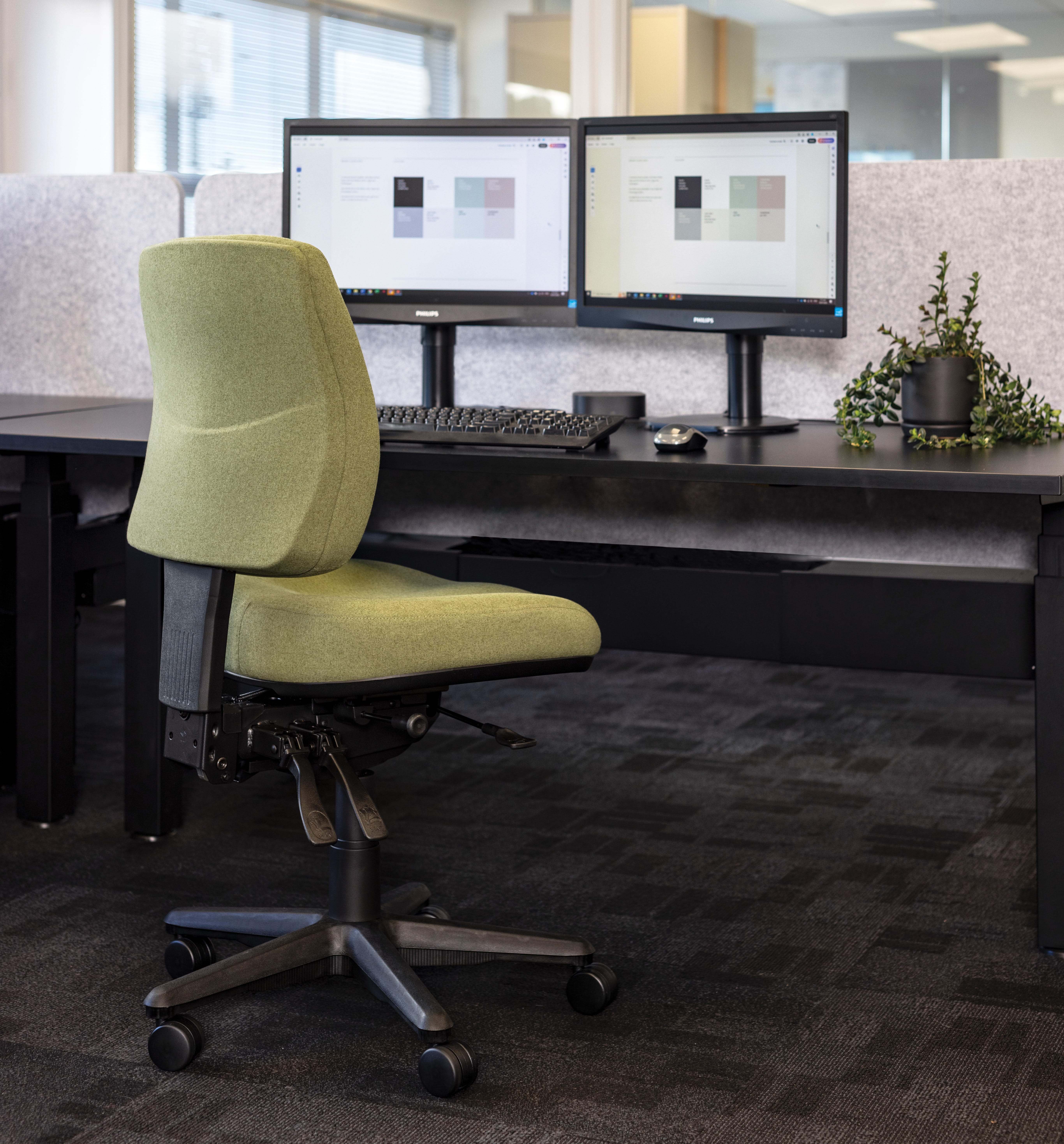
The Buro Roma – 3 Lever MB SafeTex with Seat Slide features SafeTex anti-bacterial upholstery, making it ideal for practitioners, reception teams, and customer service staff working at computers.
Comfort for people who may wait for hours
In emergency departments, oncology units, and specialist clinics, patients and families may be seated for several hours. That places a real physical demand on both the person and the furniture. A few factors make a consistent difference:
Seat height
For older patients or those recovering from surgery, a seat that's too low can be genuinely difficult to exit without assistance, a small detail that matters a great deal to the people who need it most.
Armrests
They do more work in healthcare settings than most, helping patients lower into and rise from seating, providing stability for people managing pain, and creating a natural sense of personal boundary in shared configurations.
Postural support
A chair with a contoured backrest and appropriate lumbar support will reduce fatigue significantly for patients waiting extended periods, compared with flat or rigid seating.
Soft seating is also worth considering in areas where the clinical intensity is lower, family zones, paediatric waiting areas, or longer-stay corridors. The warmth of well-specified upholstered seating can shift the character of a space from institutional to human. The surface still needs to meet cleanability standards, but the effect on how a space feels can be considerable.
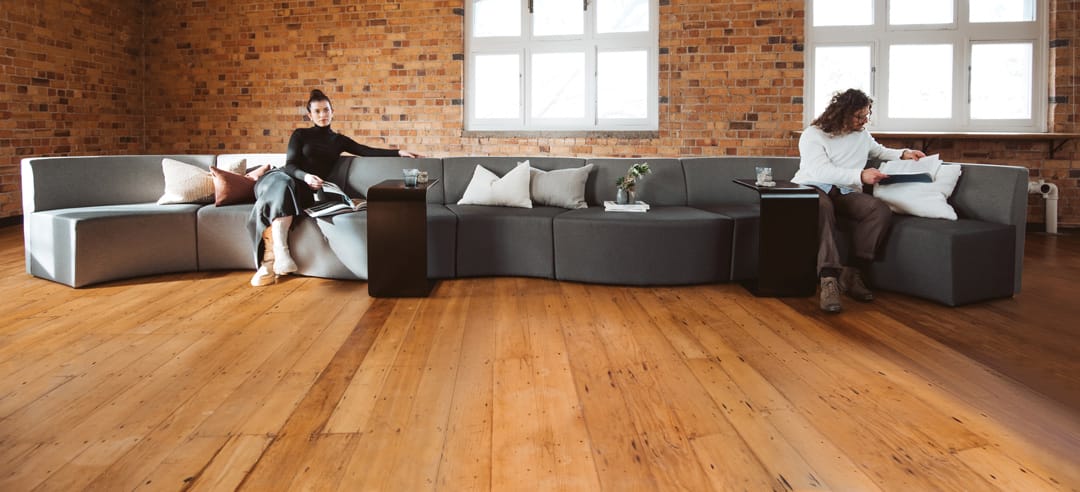
The Konfurb Arco in the 'Wave' configuration.
How layout shapes the way people experience a space
The way seating is arranged shapes how a space feels, often more than people realise. Linear configurations along walls give each person breathing room, which tends to be exactly what someone anxious or unwell actually wants. Grouped or inward-facing arrangements work better for families, where people want to face each other and feel like they have their own corner of the room, even in a busy waiting area.
A well-planned waiting area often combines both: linear seating along the perimeter for individuals and shorter waits, with a grouped soft seating zone for families or longer stays.
This approach informed the seating at Sydney Children's Hospital – Randwick, where the Konfurb Arco (Straight with Back) was specified for waiting areas and upholstered in Wortley Austex Tessuto in Tela. A warm, neutral commercial fabric that holds up to the demands of a busy hospital while keeping the space feeling considered rather than clinical.
Don't overlook the people who work there
Patients get most of the attention in healthcare furniture discussions, but clinical staff are spending 6–10 hours a day in these environments. Nurses, allied health workers, and administrative staff have real ergonomic needs, and poorly specified task seating is a well-documented contributor to musculoskeletal complaints across the sector.
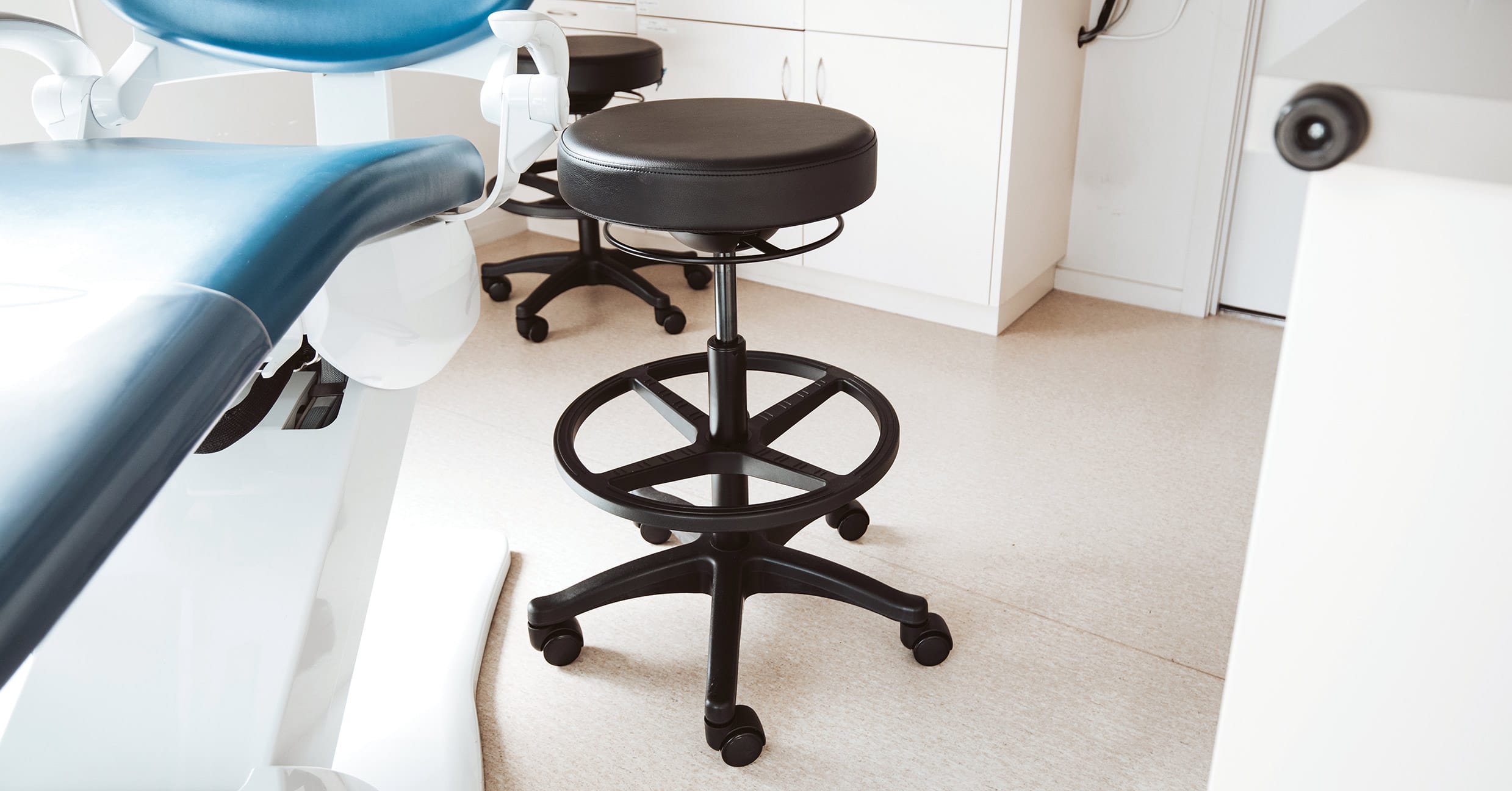
For clinical workstations, the same hygiene requirements apply. The Buro Roma 3 Lever high Back chair upholstered in Dillion PU fabric covers both: PU upholstery for cleanability, plus a comfortable seat and seat slide for postural support across long shifts. For staff who move frequently between patients or workstations, ergonomic stools offer rapid repositioning and take up less floor space in tight clinical settings.
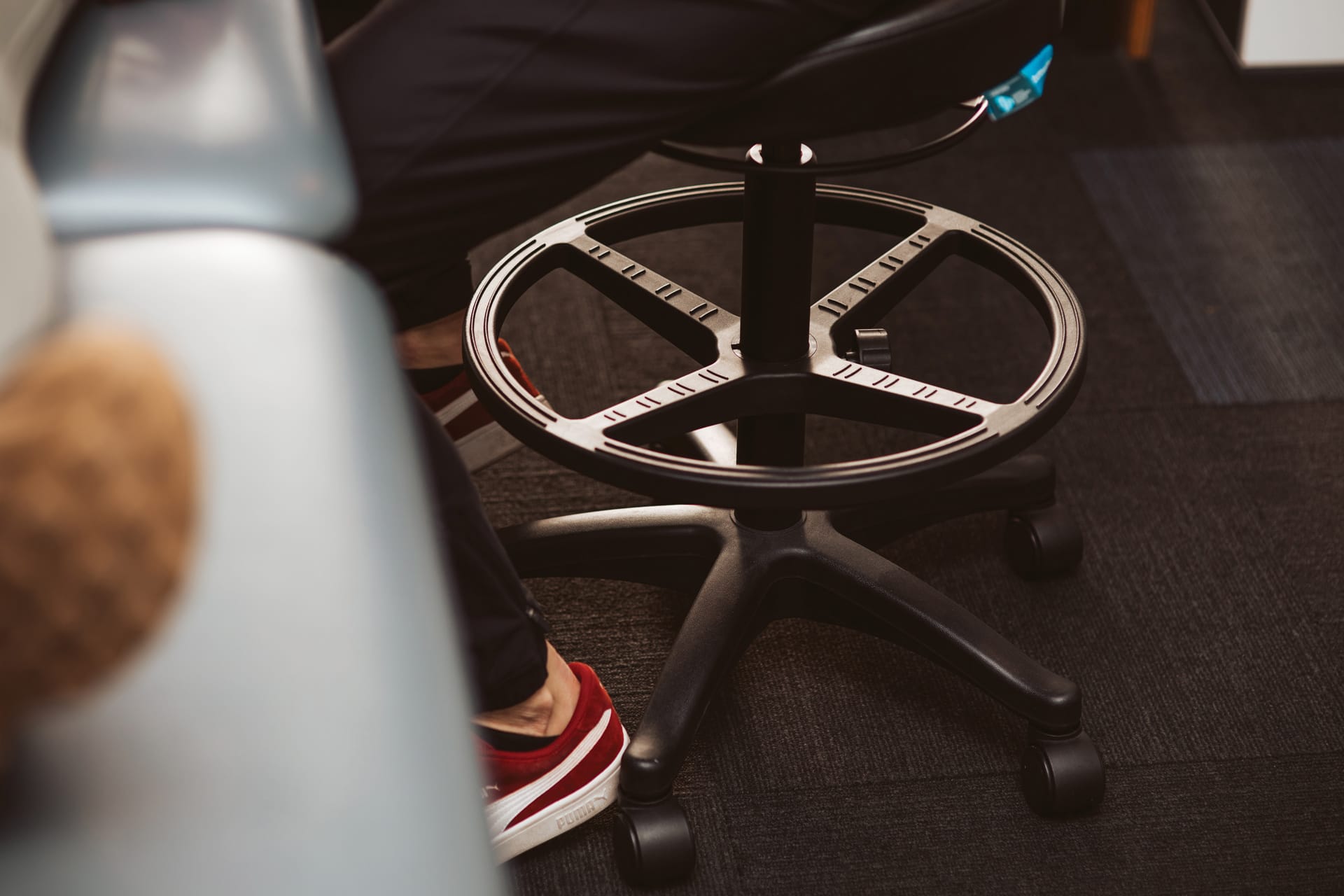
A physiotherapist uses the Buro Polo Drafting Stool to switch between computer and patient work.
A space that works for everyone in it
The seating in a healthcare environment is used by some of the most vulnerable people in any community. Getting the specification right, hygiene, comfort, and layout is a form of care in itself.
Explore Buro's range to find seating suited to Australian healthcare fit-outs. For project specification support, connect with your local Buro dealer.